

Dr. Mir Jalal al-Din Kazzazi stated that one of Rudaki’s most remarkable and enduring qualities is his ability, through artistic expression, to evoke the ancient eras of Iran’s history and culture. Rudaki’s poetry, he noted, recalls the distant past of Iranian civilization and keeps it vividly alive.
Kazzazi emphasized that Rudaki was not only a poet but also a minstrel and musician. He mastered all forms and structures of Persian poetry and left behind enduring masterpieces. For this reason, Rudaki is rightfully regarded as the Father of Persian Poetry.
Rudaki is widely respected and celebrated throughout Iranian lands and across Persian-speaking regions. Scholars and Iranologists are well acquainted with this eminent poet, who is particularly honored in countries where Persian is spoken.
According to Dr. Kazzazi, Rudaki stands among the most distinguished cultural figures of Iran. In an era marked by the appropriation of literary figures, various countries may attempt to claim him. Nevertheless, he stressed that Rudaki lived within the historical geography of Iran and remains one of the proud cultural sons of the Iranian land. Modern geographical divisions, he added, did not exist in Rudaki’s time. While great figures belong to all humanity, each nation naturally takes pride in its own cultural icons.
Dr. Kazzazi also highlighted Rudaki’s close connection to music, noting that he was deeply familiar with melody and song and at times performed his own poems by singing them.
For this reason, some biographers have referred to Rudaki as the “Adam of Poets,” a title meant to convey that Rudaki’s position in Persian poetry is comparable to the role of prophets in human history.
Unsuri, the chief poet of the Ghaznavid court, who according to his own verses and later biographers possessed a strong sense of self-regard, nonetheless found himself compelled to openly praise Rudaki and acknowledge his superiority. In several couplets, he admits that while Rudaki’s ghazals set a standard of excellence, his own poetry could not truly match that style.
Literary historians continue to debate whether the ghazal emerged as an independent poetic form during the Samanid era or whether it originally functioned as a section of the qasida, known as taghazzol. Some scholars trace the ghazal back to one of Iran’s most ancient literary genres, the chakameh. One of Rudaki’s greatest distinctions lies in his ability to revive the ancient spirit of Iran’s history and culture through his art.
These early poet-minstrels played a foundational role in shaping Persian literature. Two enduring and essential domains define this tradition: epic and lyric or convivial literature. Both owe their richness to artists who preserved heroic legends and lyrical themes through song and verse.
Epic narratives inevitably contain lyrical elements, a truth clearly reflected in the Shahnameh, where heroic deeds coexist with moments of love and emotional depth. Without towering figures such as Rudaki at the dawn of Persian literature, these two literary realms might never have achieved such brilliance and refinement.
Over time, poetry and music gradually separated, with minstrels performing the works of others, a practice that continues today. In the earliest phase of Persian literature, the term ghazal corresponded to the Sasanian chakameh, known in Middle Persian as chakamak. Had Rudaki not composed and sung poetry at this formative moment, the Persian language would lack much of the beauty and depth it possesses today.
At a time when literary appropriation and the misattribution of poets have become increasingly common, international events such as the Rudaki Conference play an important role in introducing Iran’s great cultural figures to a global audience and countering such claims. These gatherings help deepen both national and international awareness of Iran’s literary and cultural heritage, particularly in an age when modern media technologies make global cultural engagement essential.
Rudaki’s greatest distinction lies in his status as the first true master of Persian literature. Although several poets composed in Persian before him, Rudaki emerged as the earliest fully developed and influential figure in the history of Iranian literature.
The shared heritage of countries such as Tajikistan, Afghanistan, Azerbaijan, and others demonstrates that cultural Iran extends far beyond contemporary political borders. Even regions with different spoken languages may be viewed, from a broader perspective, as part of Iran’s cultural sphere. Preserving this shared cultural identity requires ensuring that political boundaries do not turn into cultural divisions. Wherever we may live today, our historical roots, language, and cultural memory remain deeply interconnected. By respecting geographical borders while reaffirming our shared cultural and historical ties, many divisions can be overcome.
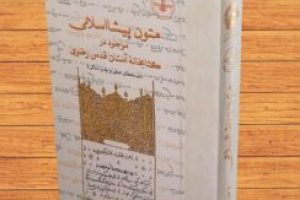
One of Iran’s most valuable artistic traditions is the art of bookmaking, where calligraphy, illumination, miniature painting, and other crafts come together in a unified artistic form. The illustrated Divan of Rudaki, presented at the international Rudaki commemoration, stands as a visually striking example of this tradition and a fine representation of Iranian book arts. To honor Rudaki is, ultimately, to honor Iran and its enduring cultural heritage.