

The traditional art of mirrorwork in Iranian architecture has been officially inscribed on UNESCO’s Representative List of the Intangible Cultural Heritage of Humanity.
According to ISNA, at the 20th session of UNESCO’s Intergovernmental Committee for the Safeguarding of Intangible Cultural Heritage in New Delhi, India, the committee approved the registration of “Ayeneh-Kari, the Art of Mirrorwork in Persian Architecture” as a globally recognized intangible cultural heritage.
This is Iran’s 27th cultural practice to be inscribed on the UNESCO list and marks the country’s first registration specifically for Iranian architectural heritage, formally placing “Persian Architecture” in UNESCO’s records.
The nomination dossier, submitted by Iran in Farvardin 1403 (March–April 2024), was compiled by Shahab Nikman. The evaluation committee praised its thoroughness, and the Intergovernmental Committee approved it for global recognition.
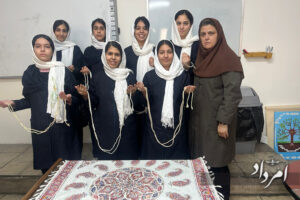
According to the dossier, mirrorwork is the handcrafted decoration of architectural surfaces—ceilings, walls, domes, columns, and panels—using cut mirror pieces. The mirrors are shaped into geometric or organic patterns and affixed to surfaces, creating designs that reflect light and illuminate spaces. This intricate art combines multiple skills, including design, mirrorwork, plastering, painting, and mosaic work. In traditional communities, mirrors and water symbolize purity and light, and mirrorwork embodies the cultural and spiritual significance of illumination.