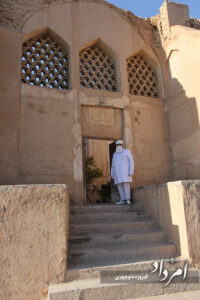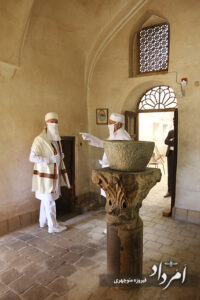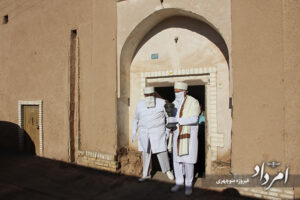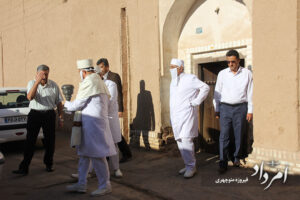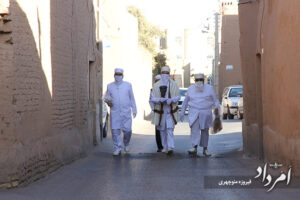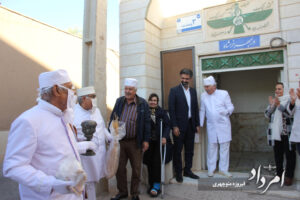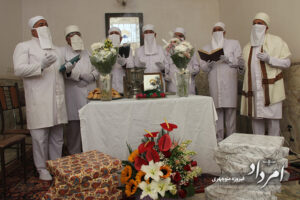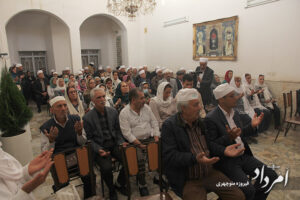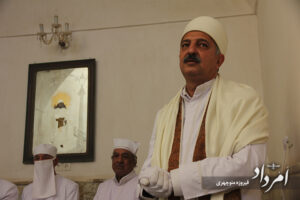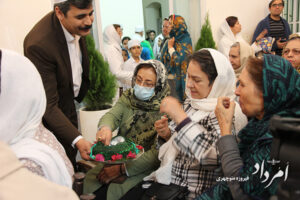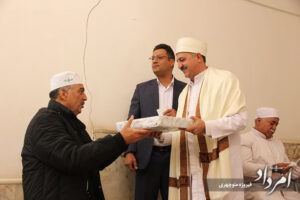


On the auspicious occasion of Azargan, a spark from the sacred Atar of Bahram of Dasturan neighborhood was ceremoniously seated at Khorramshah fire temple.
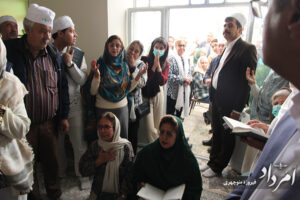
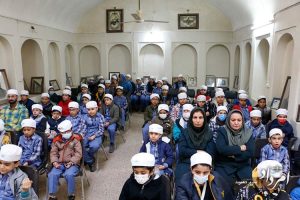
The ceremony was held on Monday, November 23, 2025 (3 Āzar 1404 in the Persian calendar), attended by Mobed Mehraban Pouladi, head of the Mobeds Association, alongside other Mobeds and members of the Zoroastrian community. During the ceremony, the spark (a flame) from the Bahram Atar of Dasturan neighborhood was united with the fire of Khorramshah temple according to traditional Zoroastrian ceremonies.
The Great Fire of Bahram
Mobed Dr. Mehraban Pouladi opened the ceremony by thanking the Mobeds who had prepared the ceremonies over preceding days to ensure that the spark could be brought and merged with the temple fire on Azargan. He highlighted that this sacred fire serves as a source of divine assistance and blessings for the community.
Explaining its significance, Mobed Pouladi said: “In Zoroastrianism, there are various types of sacred fires, but the most important is Atar Bahram. Historically, this fire was compiled from sixteen different fires by the ancient Mobeds and has been preserved through a special nine-day ceremony, with recitations conducted by seven Mobeds. In earlier times, installing the fire required reciting 1,128 verses from the Avesta and the Ordibehesht Yasht. Today, however, taking a spark, such as from the Bahram Atar of Dasturan, involves a shorter yet equally sacred set of recitations.”
He further described that the Great Fire of Bahram encompasses sixteen fires, including five celestial fires, representing three primary dimensions: a celestial fire, a worldly fire, and an inner fire. “Atar Bahram embodies all of these: Atar Burzisouh (heavenly fire), Atar Vahishta (fire within living beings), Atar Spenishté (family fire), Atar Orvazishta (fire within plants), and Atar Vohu-Fryané (inner fire within each individual). Beyond these, sixteen additional fires were historically collected by Mobeds to symbolize religious unity and authority.”
Mobed Pouladi emphasized that Atar Bahram represents Asha Vahishta—truth and righteousness. While many temples feature Aduran fires accessible to devotees for observation or photography, Atar Bahram remains strictly off-limits due to its profound sanctity. He noted that, similar to practices in major Zoroastrian temples in India, Atar Bahram is kept in a dedicated sanctuary, while Aduran fires remain accessible for worshippers. Ancient texts, such as the Yasna, detail the different types of sacred fires, including the divine attributes of Atar Bahram, particularly in section 62.
Concluding his remarks, Mobed Pouladi stated: “Atar Bahram brings joy, vitality, energy, health, and prosperity, channeling cosmic energy from the heavens into every individual. Specific ceremonies are dedicated to it. According to oral history from Zoroastrian families in Yazd, Atar Bahram first came to the Dasturan neighborhood in 1372 SH (1993–94 CE), and it has now taken fifty years for a spark from that fire to be brought to Khorramshah Fire Temple—a significant and blessed event for our community.”
Installation of the Sacred Fire at Khorramshah Fire Temple
Mobed Dr Mehraban Pouladi explained the process of placing the sacred fire at Khorramshah fire temple. In the days preceding the ceremony, recitations from the Vendidad, Yasna, and Srood are performed for blessings. The installation ceremony is held on two specific days of the Zoroastrian year—Ordibehesht and Azar—as Azar is associated with the Amesha Spenta of fire.
During the ceremony, the fire is brought in a special container that shields it from sunlight. Three fire-prayers (Atar Niyayesh) are recited; the fire typically ignites during the third prayer, though in this ceremony it flared during the second. Ash is sprinkled twice around the fire: first to honor the righteous, and second to invoke the fire’s assistance for the community. Sandalwood sticks, wheat stalks, and specially prepared logs are placed on the fire, along with powdered offerings, following precise ceremony order.
Mobed Pouladi expressed gratitude to the Khorramshah Zoroastrian Association, the chief Mobed, and all participants, acknowledging the long-standing contributors who have tended the fire over the years.
Students’ Participation
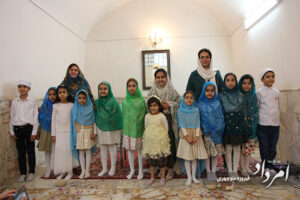
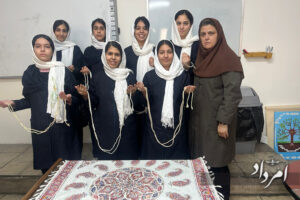
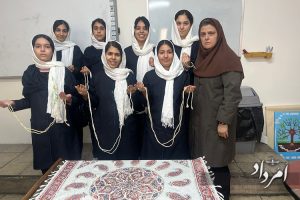
Students from Markar Girls’ Elementary School—taught by Nahid Khanjari—performed a poem by Nasrin Khanjari, marking its public debut. Two boys from Khorramshah also participated. Mina Khavarian, head of Markar School, attended the ceremony.
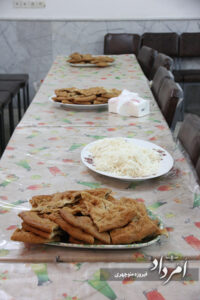
The event concluded with sirog (sweet flatbreads) and pashmak for attendees, adding a joyful touch to this auspicious ceremonious occasion.