

Heritage activists and restoration experts in Fars Province have warned that the mausoleums within the Hafezieh complex are in a dire state.
Photographs provided to ISNA by restoration specialists and cultural heritage advocates reveal that many of the tombs on the Hafezieh grounds are poorly maintained. One expert noted that the site contains significant mausoleums dedicated to notable figures, including poets, mystics, and members of the Ghavam family. However, inspections show serious deterioration and improper restorations, even in mausoleums with valuable ornamental features.
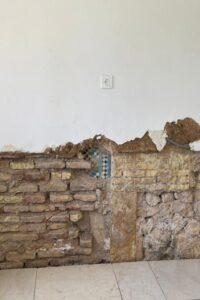
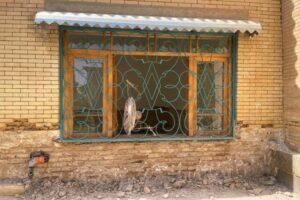
Experts report that the wooden doors and windows have been severely damaged by termites, and some sections have been inappropriately restored using cement and particleboard instead of traditional wood. Numerous cracks are visible throughout, and the interiors are cluttered and filled with trash, highlighting a lack of proper upkeep.
Some of these mausoleums were reportedly restored by unqualified individuals around five to six years ago. Specialists stress that immediate professional restoration is necessary to prevent further damage and preserve these historical sites.
A restoration expert, following a recent assessment of the Hafezieh mausoleums, informed ISNA about the fragile state of a decorative pendant (avizeh) in the vestibule of the Hafez Study Room. This rare ornament, combining Yazdi-bandi and Rasmibandi styles—a hallmark of a specific period in Shiraz—is one of only a few of its kind. Part of the pendant has already collapsed, and the right section is in poor condition, posing an immediate risk of falling. The expert also observed cracks, moisture damage, and structural instability in the vestibule itself.
The expert, who requested to remain anonymous, highlighted even greater concerns at the Ghavam Mausoleum. This mausoleum contains a valuable pendant that requires continuous monitoring, but unfortunately, it has not been properly maintained for a long time. Over the years, cracks have formed in the pendant, and temporary repairs using white cement and stone powder have been repeatedly applied to both the pendant and the vestibule. Without proper restoration, the pendant risks further collapse in the coming years. The expert emphasized that the Ghavam family, as the endowment owners, and cultural heritage authorities should take action to preserve and restore this historically significant site.
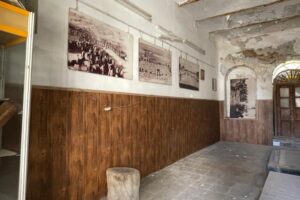
Earlier, cultural heritage activist Siavash Arya also drew attention to the deteriorating state of the Ghavam-al-Molk family mausoleum, a structure from the early Pahlavi period built in the Qajar architectural style.