

Religious ceremonies have always played a central role in preserving identity and fostering communal solidarity. Among ancient Iranian traditions, Zoroastrianism—with its enduring customs—continues to shape the life of its followers. One important practice is the renewal of the Koshti (ceremonial girdle), a symbol of truth, purity, and the covenant with asha (righteousness).
Although wearing the Sedreh (ceremonial undershirt) and tying the Koshti remains widespread among many Zoroastrians as a sign of inner renewal and devotion, this practice has received relatively little attention in recent years. T This study examines the status of Sedreh Koshti through conversations with community members and field observations, exploring why this decline has occurred and suggesting ways to strengthen communal participation and awareness of their value.
Research Background
So far, two main studies have addressed the Sedreh and Koshti: “Sedreh and Koshti and People’s Perception of Wearing Them from Past to Present” by Ariana Esfandiarian and Arnika Bahmardi (1402/2023), and “Sedreh and Koshti” by Mobed Mehrab Vahidi. These works focus largely on the garments’ form, appearance, craftsmanship, and evolution over time, analyzing them mainly as individual or family symbols.
In contrast, the present study highlights the collective and ceremonial dimensions of the tradition, emphasizing cooperation, social participation, and the shared cultural significance of renewing the Koshti. This perspective sheds light on new aspects of its social and cultural functions and aims to contribute to preserving meaningful, joy-bringing Zoroastrian practices.
Chapter 2: The Philosophy of Sedreh and Koshti
This chapter explores the philosophy of the Sedreh and Koshti, examining their meaning, significance, and place in Zoroastrian ceremonies.
The Sedreh is a white garment of praise for Ahura Mazda, designed to protect the wearer from base desires, evil, and impurity. It acts as a symbolic armor of thought and mindfulness, representing inner clarity and purity. In the Avesta, it is called Vohumane Vastram, the garment of good thinking. Wearing the Sedreh aligns both inner and outer self with righteousness.
The Koshti, a ceremonial girdle, complements the Sedreh as a symbol of determination, commitment, and the shared bond with fellow Zoroastrians in promoting truth and goodness. Together, the Sedreh and Koshti serve as daily reminders of spiritual values and ethical conduct.
The Sedreh is a loose, short-sleeved, collarless shirt, traditionally made from cotton, wool, or silk. It features a small symbolic pocket, the Kireh Kaf, representing good thoughts, words, and deeds, which the wearer strives to cultivate throughout the day. Its whiteness signifies purity and devotion, while the combination of cotton and wool symbolizes the sacred stages of creation.
Wearing the Sedreh and Koshti is a deeply meaningful practice for Zoroastrians worldwide. In India, the Sedreh is often worn visibly under a sari, sometimes made of white netting for a decorative effect. The garments serve as spiritual armor, similar to sacred undergarments in other religions, such as the Jewish tallit katan, the Mormon temple shirt, or the Sikh sacred shirt.
This long-standing tradition also shares historical roots with the sacred cord of Hinduism, though over time the two practices evolved separately. For Zoroastrians, wearing the Sedreh and Koshti under their clothes remains a lasting sign of faith, reflecting commitment to purity, moral conduct, and the core teachings of their religion.
2.2 Koshti
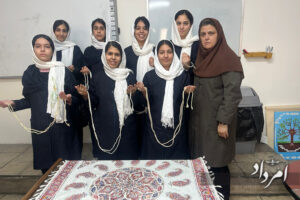
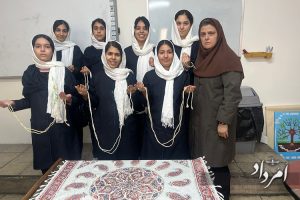
The Koshti is a narrow, long cord made from seventy-two strands of sheep’s wool. During weaving, these strands are divided into six groups of twelve and intertwined, with knots tied at both ends. Zoroastrians tie the koshti around the sedreh 3 times: in the second round, two knots are tied in the front, and in the third, two knots are tied at the back. The Avestan term for Koshti is Aivya Vanghen. Zoroastrians across the world continue to make it from sheep’s wool.
The Koshti serves as a reminder of the seventy-two hāth of the Yasna and the six Gahambar festivals within the twelve months of the year. The seventy-two strands are tightly interwoven to strengthen your resolve and moral courage. It reminds the wearer that throughout the year, they are bound to uphold truth, goodness, purity, peace, and righteousness, resisting evil, falsehood, and chaos.
Wrapping the Koshti three times around the waist symbolizes Humata, Hukhta, and Hvarshta (good thoughts, good words, and good deeds). The four knots tied to the Koshti carry specific meanings. The first knot affirms belief in the one God; the second testifies that Zoroastrianism is divine and true; the third acknowledges the prophethood of Zoroaster; and the fourth signifies acceptance of the three core principles of Zoroastrianism: good thoughts, good words, and good deeds.
According to the Bundahishn, the Koshti is like the stars encircling the sky, surrounding humans so that the darkness and impurity of the lower self-do not mix with the light of the higher self.
2.3 The Importance of Sedreh and Koshti
Zoroastrianism, one of the world’s oldest religions, emphasizes purity of thought, word, and deed. Humans are seen not only as responsible for their own lives but also as partners in spreading goodness. In this context, the Sedreh and Koshti are more than garments—they are living symbols of faith, purity, and commitment to truth.
Wearing the Sedreh and tying the Koshti reminds Zoroastrians to uphold righteousness and light over darkness. These items connect modern practitioners with their historical and cultural heritage, acting as a spiritual shield through challenges and persecution.
Historically, strict adherence was expected. Records from the 13th century Yazd and 14th century Tehran show that community leaders emphasized wearing the Sedreh and Koshti and provided them to the needy. In Iran, persecution sometimes forced Zoroastrians to hide these garments, while immigrant communities could wear them freely. Elderly Zoroastrians sometimes draped the Koshti over the shoulders instead of the waist, a practice now mostly obsolete.
Despite centuries of hardship, the Sedreh and Koshti remain enduring symbols of faith, identity, and perseverance.
4.2 Sedreh-Pushi
Sedreh-Pushi marks a Zoroastrian child’s formal acceptance of the faith, symbolizing spiritual rebirth. It is also called Nozad (newborn) or Nozat (addition of a devotee). The ceremony emphasizes both inner and outer signs of faith: the inner being the principles of Humata, Hukhta, and Hvarshta—good thoughts, good words, and good deeds—which guide believers toward purity, truth, and ethical conduct.
The ceremony is usually held when the child reaches an age of understanding, typically between eight and fifteen. During the event, the child, along with family and friends, recites the Avestan 《Peymandin》 before a Mobed, who then ties the Koshti, symbolizing the child’s personal commitment and responsibility in the faith.
Public ceremonies, often held on significant Zoroastrian days such as Gahambar festivals, Nowruz, or Zoroaster’s birthday, help create lasting memories and strengthen community bonds. They also serve as a reminder to renew the Koshti during daily prayers, festivals, and visits to sacred sites, fostering unity and spiritual growth among Zoroastrians.
Interview with Banu Firouzeh Foroudi
Q: Can you briefly explain the philosophy of Sedreh and Koshti?
A: The Koshti belt predates Zoroaster. In ancient times, when boys reached around fifteen—the age of maturity—they were given a warrior’s belt and garment, marking their entry into a new stage of life. Zoroaster wore such a belt but transformed it into a gentler form made from harmless animal wool, symbolizing non-harmfulness and service to others. Over time, this evolved into today’s Koshti.
Traditionally, only female Mobeds wove the Koshti, passing the skill to their children. Today, few artisans continue this practice, making it time-consuming to produce multiple Koshtis.
Zoroastrianism emphasizes inner and outer signs of faith. The inner sign is living by good thoughts, words, and deeds. The outer sign is the Sedreh: a close-fitting, short-sleeved shirt with nine seams representing core beliefs, and a small front pocket, the Kireh Kaf, symbolizing good deeds. Its cotton fabric helps regulate the body’s electrical currents, while its white color represents purity, a central value of the faith.
The Koshti belt, made from 72 threads, is hollow to symbolize the unseen spiritual world alongside the material world. Its threads represent the 72 chapters of the Yasna, arranged in six bundles of 12 for the Gahambars and months of the year. Traditionally worn at age 15, today it is tied to mental maturity, serving as the outward sign of being Zoroastrian.
The belt also has spiritual and physical significance: tied over the navel, it aligns with a chakra, warms the body, and channels positive energy.
Banu Foroudi emphasizes the importance of renewing the Koshti: parents’ guide children to the practice, but adolescents often wear it irregularly. She suggests making it a daily habit, such as wearing it before bed, to remind them of good thoughts, words, and deeds, fostering the same devotion as past generations.
Q: How do you feel about renewing the Koshti?
A: Renewing the Koshti brings me positive energy. When I feel low, performing this practice—especially in a group—uplifts my mood, spreads good energy, and removes negativity. Symbolically, it drives away evil, and science also supports the positive effects on well-being.
Q: Do your children renew their Koshti?
A: My children went through Sedreh-Pushi together. In Ahvaz, our religious practices were strong—we read the Avesta and renewed the Koshti as a family. After moving to Tehran, my son continued the practice at school, but peer reactions made him gradually lose interest.
Q: Do you think maintaining this practice helps preserve Zoroastrianism?
A: Definitely. The Sedreh and Koshti are outward symbols of faith, helping preserve the tradition. While some cultures have similar rites, this practice is unique to Zoroastrianism. Its global recognition—in countries like Russia, the US, Germany, the UK, and France—reflects the depth of our faith. Preserving these customs is essential to keeping our cultural and spiritual heritage alive.
Q: How can we encourage those who don’t renew their Koshti to do so?
A: I think it should start in schools. Children in primary school learn best, and if this practice is taught early, it becomes a lifelong habit. Religious practices aren’t like academic subjects—they must be internalized. For instance, students in India who learn Zoroastrian traditions continue renewing their Koshti daily, even after leaving the country. It becomes as natural as eating meals. Teaching it consistently from childhood ensures it carries into adolescence and adulthood.
Q: Why do only priests usually renew the Koshti during ceremonies, while others rarely do?
A: Many people don’t know how to do it and fear making mistakes, so they avoid it altogether. This gradually weakens the tradition. Group sessions could help, where everyone learns and practices together. Even if children are less involved at first, adults can learn and pass the habit on to their families, keeping the practice alive.
Q: What is your overall suggestion regarding this?
A: First, it’s excellent that programs like the Mantra competitions are held, and I thank the student association for organizing them. These events help children learn about our faith, ask questions, do research, and even practice public speaking. They are also a perfect opportunity to teach Koshti renewal.
From my experience, boys usually know how to renew their Koshti, but girls less so. During Mantra camps, dedicating 15–20 minutes daily for practice, or having skilled students teach others for an hour or two, would encourage wider participation. Learning from peers is particularly effective, as children are more engaged and receptive when taught by friends. I believe such programs at youth gatherings can help all children gradually master Koshti renewal, understand its spiritual and personal benefits, and recognize it as a vital part of preserving Zoroastrian faith and culture.
Interview with Mobed Mehrab Vahidi – History of Sedreh and Koshti
Mobed Vahidi explained that before Zoroaster, boys and girls at age 15 underwent tests and received a belt, symbolizing maturity. Zoroaster retained this practice but refined it: the belt became the Koshti, and the white shirt became the Sedreh. In the Sassanid era, due to its importance, the Koshti was often worn over clothing as a visible sign of faith.
The Significance of Sedreh and Kusti in Zoroastrianism
– The Role of Kusti and Its Renewal
Wearing and renewing the kusti, especially during religious and communal ceremonies, is vital for preserving the strength and continuity of the Zoroastrian faith.
– Personal Feelings About Renewing the Kusti
Renewing the kusti brings me inner peace when I am alone and a sense of unity and solidarity during communal ceremonies.
– Do Your Children Renew Their Kusti?
My son has not yet worn the sedreh, but he does participate in renewing the kusti.
– Does Preserving This Ritual Help Sustain the Faith?
Absolutely. Maintaining this practice reinforces the values and identity of Zoroastrianism.
– Encouraging Others to Renew Their Kusti
Mobeds and religious leaders should explain the significance of the sedreh and kusti in simple, accessible terms. The more people participate, the more others are motivated, particularly adults. Programs can also be organized to promote wearing the sedreh and renewing the kusti.
– Why Some People Don’t Renew Their Kusti During Ceremonies
Some individuals do not wear the sedreh, feel shy, have forgotten the proper way to renew the kusti, find the wool uncomfortable, or are unaware of its spiritual significance. Historically, when parents did not practice this ritual, children often grew up unfamiliar with it.
– Suggestions for Promoting Kusti Renewal
Explain the philosophy of the sedreh and kusti in simple terms, emphasize its spiritual value, combine the practice with melodious Avesta recitations to make it more engaging, and organize festivals or competitions focused on kusti renewal, especially for children and youth. Teaching the younger generation ensures that this sacred ritual continues for future generations.
Analysis of Results
The study shows that most participants were within the age ranges of 13–18 and 36–45 years. In terms of education, the majority held bachelor’s degrees, and women were more prominently represented. About 85% of participants wear the sedreh, with most having adopted the practice over ten years ago.
However, a significant number do not regularly renew their kusti. The primary reasons cited were lack of time, low motivation, and the absence of companions to perform the ritual with. Despite this, 72% of respondents believe that abandoning the practice would endanger Zoroastrian identity.
Many participants emphasized the need for proper and targeted education to sustain this tradition. Around 40% reported that renewing the kusti brings them a sense of inner peace. Yet, most have only partial understanding of the philosophy behind the sedreh and kusti, indicating a continuing need for awareness and instruction.
Conclusion
Our literature review shows that despite religious education in schools, much of the philosophy behind the sedreh and kusti remains unknown and insufficiently taught. To preserve this tradition, it is crucial to spark students’ curiosity and provide proper guidance.
Field research and interviews revealed that this valuable ritual has diminished over time. While many understand its importance, barriers such as lack of education, insufficient practice, and absence of companions limit its observance. Active involvement from parents, followed by religious instructors, is essential; without repeated guidance, even existing education is unlikely to have a lasting effect.
Traditional rituals, though sometimes weakened by modern life, remain central to individual and collective identity. The study highlights a gap between belief in the importance of the sedreh and kusti and actual practice. Targeted education and communal participation are key to bridging this gap, as collective practice strengthens both social and identity dimensions.
Participants also reported that renewing the kusti brings inner peace and a sense of connection, suggesting the ritual addresses spiritual and emotional needs, especially for youth in a stressful world.
In conclusion, the future of the sedreh and kusti depends on both individual belief and practical support from families, teachers, and cultural institutions. With modern, engaging approaches and communal opportunities, this tradition can continue to thrive and remain a vital part of Zoroastrian identity for generations.
Authors: Mantra Khosraviani, Yasna Khosraviani, under the guidance of Mobed Sarvar Taraporevala, presented at the 32nd Summer Mantra Conference (Summer 2025).
This work was selected in the under-18 category for the Gathology project-based section.