

Sirous Parham, one of Iran’s pioneering literary critics in the Western tradition and an early professional editor, passed away.
Born on 22 January 1929 in Shiraz, Parham was a translator, editor, literary critic, art historian, carpet expert, and the founder of the National Archives of Iran. For over fifty years, he made significant contributions to Iranian literature, culture, carpets, and translation. He also wrote under the pen names “Mitra,” “Dr. Mitra,” and “Cyrus Bram.”
Parham was among the first professional editors in Iran and served as the inaugural editor for Franklin Publishing (now Elm va Farhang). Yet his most enduring legacy was the founding of the National Archives of Iran in 1970, which he regarded as the greatest achievement of his life. He led the organization from 1970 to 1980, rescuing countless historical documents that were at risk of being lost—even in a country whose earliest archival records date back to the Achaemenid dynasty.
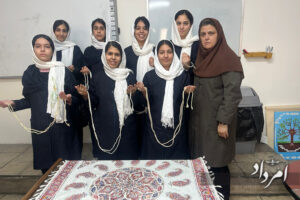
Sirous Parham was a distinguished researcher in Iranian carpet studies and authored numerous important works in the field. He also served on the board of the Iranian Carpet Museum. Much of his scholarship focused on translating and researching carpets and tribal handwoven textiles. His authored books, including Nomadic and Rural Handwoven Carpets of Fars, are considered key references and textbooks in carpet studies. His final work, History of Carpets and Carpet Weaving in Iran, further cemented his status as one of the country’s leading carpet experts.
Parham earned his bachelor’s degree from the University of Tehran in 1951 and his doctorate in political science from the University of Berkeley in 1954. That same year, he published Realism and Anti-Realism, which became rare within just two months. He was also among the pioneers of translating Western poetry into Persian.
According to his wife, in accordance with his wishes, Sirous Parham will be laid to rest in the courtyard of Imamzadeh Taher in Karaj.