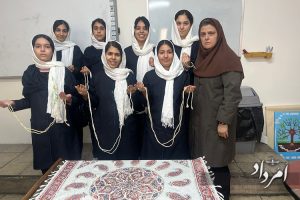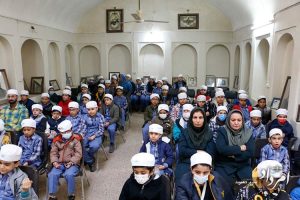


Pantea Babakan, manager of the Kharasheh Sports Complex, commented on the recent talent identification program: “13 athletes were identified in basketball, seven in volleyball, and nine in badminton. However, not all identified talents will be accepted by the federation. This process is similar to a university entrance exam — some may not pass the official selection.”
About herself:
I am Pantea Babakan, a longtime sports professional and graduate of Tehran Markaz University in Physical Education. I managed municipal sports halls for 15 years and worked on BOT and BOLT contracts for sports complexes. I played for the national youth basketball team in 2007–2008 and have remained active in sports ever since. Over the past year, I have dedicated myself fully to the Kharasheh Sports Complex, working from morning until night.
Could the Babak Kharasheh Sports Complex Form Its Own Team?
“Forming a team under the Babak Kharasheh name would be wonderful, but it requires time, energy, and resources — and right now, I simply don’t have them. Over the past year, we’ve worked from morning to night in a complex that initially lacked water, electricity, and gas, and we’re still handling sewage connections. Despite this, we managed to run 24 sports disciplines at high quality.
I’ve been in sports for 15 years, building credibility and reputation, and I don’t want to risk that with anything less than excellence. Our focus is on maintaining top quality.
This year, we held the first Babak Kharasheh Cup on its namesake’s birthday, giving teams a chance to prepare for the Janbakhtegan Cup. I hope to make it a permanent event. But at this busy time, forming a team isn’t possible — after a year of intense work, I need a break before taking on more.”
Can the Recently Identified Talents Form a Team?
“These children have only been identified as talents; it doesn’t mean they automatically form a team. In badminton, for example, players will need to take official tests set by the federation to see if they qualify for support. Not all discovered talents will be accepted — some may not meet the requirements.
Our role at the Kharasheh Complex is to guide parents, showing that their child has potential and that family support is crucial. For instance, a seventh-grade boy from Kerman must be taken to the local federation for evaluation before he can progress.
Parental involvement makes a real difference. Talents like the player noticed by Setareh Sistani and coach Soudeh Rezaei at our complex succeeded because their families followed through. Talent identification alone doesn’t guarantee a player becomes a champion or forms a Kharasheh team — it requires collaboration between scouts, coaches, and families.”
Do Players Here Form Teams Under Their Coaches’ Names, Like Alireza Nadi’s Team?
“No. Alireza Nadi is a volleyball coach at the Kharasheh Sports Complex. He trains the children under the organization and receives his salary from us. There is no team under his name. We even reduced our own income to hire top coaches because we want the best for our athletes.
Talents identified in the Cup can attend training sessions with these coaches at Babak Kharasheh, with a 50% discount for Zoroastrian participants, supported by the Zoroastrian Association of Tehran. They can train alongside non-Zoroastrian players.
A child’s progress depends on family support — it may take up to two years of dedication to become a player.
How many talents were identified in this Cup?
I received a finalized list via WhatsApp today and will report it to the Zoroastrian parliamentary representative. Further progress depends on the children and their families.”
What happens after the report is submitted to the Zoroastrian representative?
We provide only a report to Behshid Bokhordar, the Zoroastrian parliamentary representative, who requested talent identification within a short timeframe. We also consulted with federations where we had stronger connections. The report confirms that these children show potential, but that alone isn’t enough — further progress depends on the families. For example, parents must take their child to a skilled coach for consistent practice. At this age, the athlete is still raw and needs proper guidance. We inform families that the child has the potential to become a professional in that sport.
Can the Babak Kharasheh Complex directly place these talents in a training program or with a coach?
No. Only the relevant sports federations can organize official talent development within their scheduled calendar. For instance, the badminton federation sets a timeframe for under-16 trials. Girls identified in the Cup cannot yet be officially sent for trials, though personal connections may help in some cases. Boys will have their federation trials next week. Our role is only to guide the children and their families on how to connect with these opportunities — similar to a university entrance exam.”
What are your thoughts on this year’s Cup?
“This year’s Cup was much more organized and coordinated than previous editions. Talent identification motivated both children and coaches, as everyone wanted to see which participants would be selected. All the participants in the event felt more.”
Why do you think participation was lower?
“I’m not certain, but factors like war, heat, and water shortages likely contributed. Hooman Farazian, the coordinator, struggled with water issues until the very last moment. During the last two days, water was even cut off for one day. Thanks to letters from the Zoroastrian Association of Tehran, the Zoroastrian representative, and the Minister of Energy, the water supply was restored. Currently, Farazian informed me that the water reservoir is low, and pressure is weak. These challenges affected participation.”
How does this compare to the Babak Kharasheh Cup?
“The difference is significant. The Babak Kharasheh Cup had only about a fifth of the participants of the Janbakhtegan Cup. It included only three or four disciplines, and only two Zoroastrian teams participated. To hold proper matches, we invited non-Zoroastrian teams from within the complex so we could run four-sided games. Even teams from other cities did not come. The main goal of the Babak Kharasheh Cup was simply to commemorate Babak Kharasheh’s birthday on the sports calendar.”
Were there any injuries during the Cup?
“In the Babak Kharasheh Cup, there were no injuries, and I didn’t see any during the Janbakhtegan Cup either. Even if injuries occur, all players are insured, and the association handles insurance annually. Having a sports license and insurance is mandatory for hosting events, as part of the complex’s civil responsibility.”
Closing Remarks
“The children are enthusiastic and hardworking, but still young and inexperienced. They need guidance, and while the Zoroastrian Association of Tehran supports them, coordination with the Students Association and the Zoroastrian parliamentary representative isn’t yet fully developed.
Community support is crucial — with it, Kharasheh Sports Complex and its competitions can grow stronger. For example, today a parent questioned the rules during the men’s swimming event; I explained that it’s better to ask and learn before judging. The complex is open to non-Zoroastrians, but everyone must respect the rules. Patience and understanding of the challenges we face are important.”
Why was the complex closed for three days?
“Last Azar, a mixed Zoroastrian sports session was held. Authorities required that the hall either be exclusively for Zoroastrians or that all rules be strictly followed if non-Zoroastrians attend. Limiting access only to Zoroastrians would mean very few participants outside of the Janbakhtegan Cup.”