

The country’s cultural heritage and ecosystem departments always have good and bad news, the latter needing expert review and investigation in order to prevent it recurrence.
In this report, some events in the field of cultural heritage and ecosystems have been reviewed.
The researchers of Tehran University discovered the historical city of Owjan, the summer capital of Ilkhanate.
According to IRNA news agency, after 10 years of research and field excavation, the archeological researchers of Tehran University, under supervision of Dr Rahim Velayati, a member of the Archeology Department of the faculty of literature and humanities, were able to find the historical city of Owjan and the summer capital of the Ilkhans in East Azerbaijan province to discover and dig out a part of the government citadel.
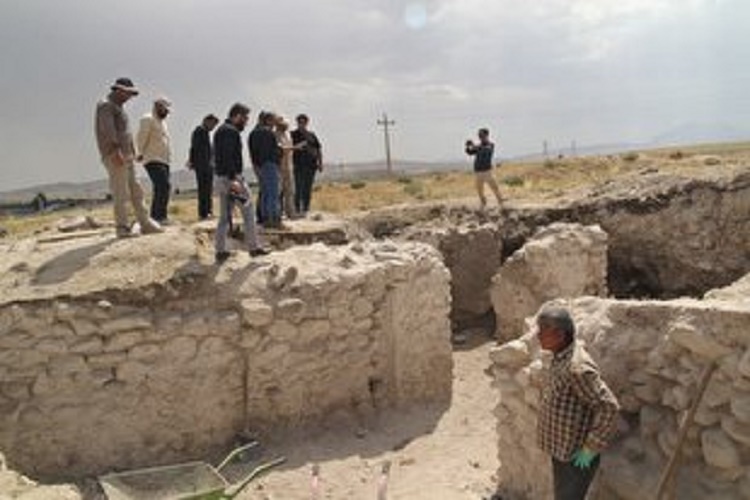
Owjan was one of the cities of East Azarbaijan province during the Seljuk and Mughal Ilkhans period, which played an important role in the social, political, and economic life of that period as Ghazan Khan, the Ilkhan who loved the Mongol culture, made some constructions in this city.
Velayati said: “The historical city of Owjan is hidden in the dust, and with the efforts and research carried out by the Department of Archeology of Tehran University, a part of the city, such as the ruler’s fortress, has been dug out from under the soil. The head of this archaeological team said that this historic discovery was made by examining more than 700 historical sites in the region and added: “In four seasons, about 700 historical sites were analyzed using important documents and descriptions from the city of Owjan in historical and geographic sketches, especially a picture of this city drawn by a famous painter of the court of Sultan Sulieman Ottoman.
He referred to the discovery of objects in this area such as the broken vessel of Buqa Ilkhanid with turquoise stone arrays and said: This excavation is vital from the point of view of architecture. However, this excavation has also discovered pottery and objects in this area. What makes it important is the value of this city’s architecture and architectural works and the government fortress of Ilkhanan.
He added: “The signs of two tomb towers from Seljuq and Ilkhanid eras and a carving in stone in the western part of the city have been found, which is believed to have functioned as a Buddhist temple cave of the Ilkhanid era.”
Head of the Archeology Department of Tehran University added: “As the excavation continued, it became clear that during the Safavid period, the eastern entrance of the fortress was closed with a stone wall in the Safavid style after a severe earthquake and extensive destruction of the defense, and in return, and instead, another entrance in the Safavid archeological style was opened. (IRNA, Amordad 24)
Where is the oldest human settlement in Iran?
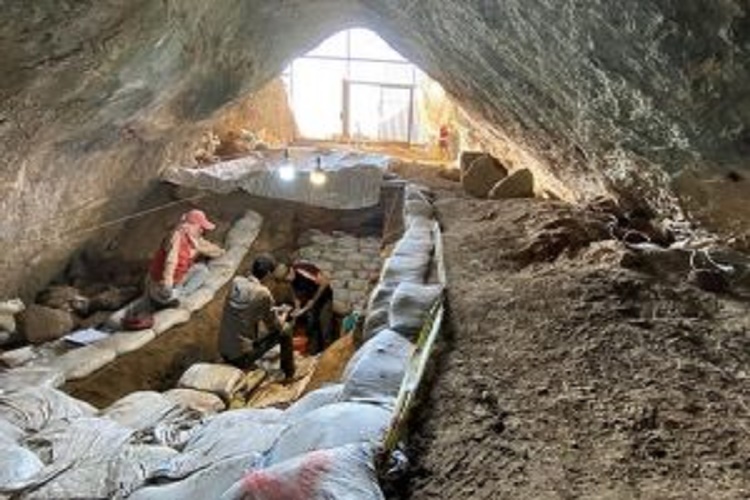
The head of the archeology and exploration group of Kurd Avaj Cave in Qazvin Province said: “Initial examinations show that the cultural deposits of this cave/castle area are over 400,000 years old, making Kurd Qala Cave the oldest human settlement in Iran.”
According to the IRNA news agency, the third season of the joint exploration of the Iranian and French team in the cave of Kurd Avaj, under the joint supervision of Hamed Vahdati Nasab from Tarbiat Modares University and Gilles Brion from the Museum of Anthropology in Paris, is underway.
Hamed Vahdati Nesab, head of the archeology department, said: “that the Kurd Qala cave is one of the most important Paleolithic sites in Iran and the Middle East, which was previously identified and investigated by archaeologists from Qazvin province.”
This archeologist spoke of the most important achievement of the second season of Kurd Qala Cave exploration, which was the discovery of a Neanderthal child’s tooth dating back 155,000 years ago, which is now housed in the Qazvin Museum.
Vahdati Nasab went on to say that the 400,000 years old stone tools found in this cave, indicate that Kurd Qala Cave was the place of residence of other human species before Neanderthal man, such as Heidelberg man or, most likely, type of upright man, and so far, two types of extinct prehistoric horses, deer, brown bear, and rhinoceros, have been identified in animal remains obtained from this area. (IRNA, Amordad 25)
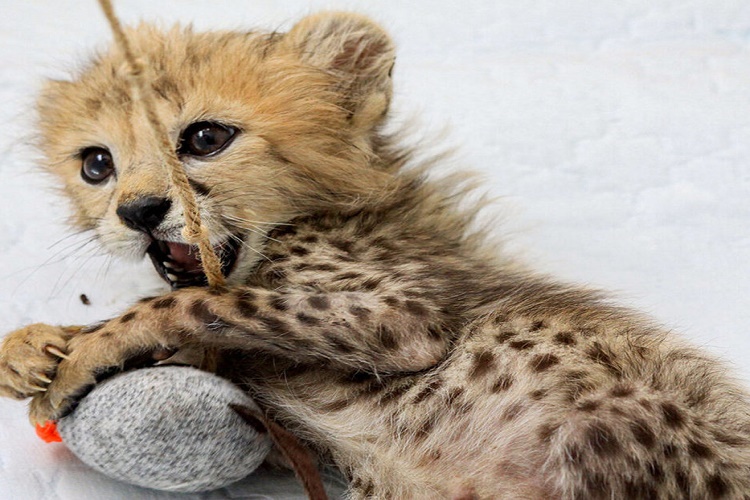
Pirouz is still not able to learn to hunt
The head of the office of wildlife protection and management announced that Pirooz”, a male cheetah cub is roaming around, as usual, in Pardisan’s open area, since September, and also about the excellent condition of “Iran”, his mother.
According to the ISNA news agency, Pirouz, the only remaining cheetah cub from Iran and “Firouz,” who was born in captive breeding conditions on May 11 of this year by cesarean section, after three months of birth, was placed in the open air for the first time and touched the ground under the sunlight.
Gholamreza Abdali stated that Firooz has yet not entered the Pardisan open space for the entire day, as a regular. The site is being prepared for him to come in September. He spends only a few hours of the day next to his guard on the site and walks under the sun.
About strengthening Pirouz’s skills, he said: “Plans to strengthen his skills in the open area will become clear with time. Pirouz is still a puppy, so we will proceed step by step and assess his condition. In the beginning, he should get used to the natural environment, desert, under the sun, etc. Getting used to each of these conditions requires time.
Pointing to Pirouz’s hunting ability, Abdali added: The living habitat of every cub, whether it is a cheetah’s cub or any other is very different, besides the fact that the mother is not sharing her hunting skills with Pirouz. Learning the skill of hunting to win depends on many things, such as his physical fitness.
According to the head of the Office of Wildlife Protection and Management, Pirouz’s weight has reached a good size considering his conditions. It also feeds on the same natural food as other carnivorous. About stability of Pirouz’s condition, he said: “He will have a more stable condition for the autumn season”.
In the end, Abdali mentioned the situation in Iran and the organization’s plans for the newly found female cheetah and her four cubs and said: Iran is in good condition, but now the organization’s focus is on “Helia,” the newly found female cheetah, along with her four cubs (ISNA, 26 Amordad)
Let us change our approach to “development”
Managers of cultural heritage bases, in an expertise meeting, spoke about the difficulties they are facing in the bases. The destructive view of development was one of these axes.
According to Mehr News Agency, Reza Sameh, Director General of the Office of National and World Heritage Sites said at the 5th National Conference of the Horizon of Transformation, which was held with the presence of directors of national and world heritage sites, that there is an uncontrollable increase in the number of missions without any target, and other such matters. Another problem is the damages that threaten the bases, while the bases also suffer from a lack of experts.
Since most of the expert work is done at the bases, salaries appropriate with the task performed there should be taken into consideration, so that ground managers can continue their activities.
In addition, Atefeh Rashnoui, director of the Chaghazanbil Global Base and the Haft Tepe National Base, said that sometimes approval of developmental projects causes difficulties. Certain negative rumors can also bring the cultural heritage experts and the people face-to-face. Boundaries have been established by experts for protection of historical sites. Therefore, these lines cannot be removed just to favor certain situations. We should change our view about development.
She said: I suggest that the boundaries set by cultural heritage are not seen as land ready to build a factory on, but to see them as land that is intended to protect the relics.
In this meeting, Mohammadreza Dashti Ardakani, the head of the parliament’s tourism and cultural heritage faction, said: “The authorities’ view of the cultural heritage sector should change. Many do not believe in historical sites needing their own boundaries. This is in spite of the fact that one of the ways to save our country from this situation is to support the cultural heritage, tourism and handicraft sector. (Mehr, 23 Amordad)
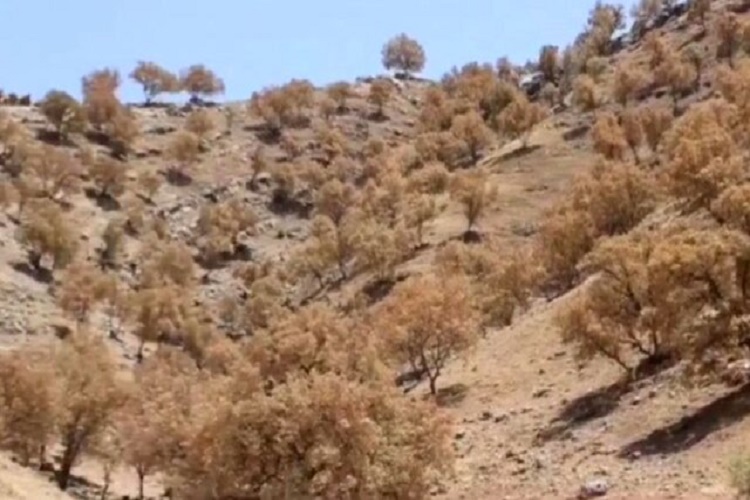
What happened to the Zagros oaks?
The oak forests of Zagros are one of the valuable natural resources in the western parts of the country, which are not in good condition now, and the livelihood of more than 50% of the people in the region is in danger.
According to Mehr news agency, the value of Zagros oak forests is not hidden from anyone familiar with the environment. However, this valuable natural resource is not in good condition. Naghi Shabanian, the Deputy of Forest Affairs in the Natural Resources and Watershed Organization, says about the oaks of Zagros: The oak forests of Zagros, under the title of the oak forests of the west of the country, have an area of nearly 6 million hectares, which are spread over 11 provinces. These forests play an essential role from the economic, social, and cultural points of view and people’s livelihood. But due to improper exploitation and excessive use, they are in danger, and their biological balance is threatened. Examples of incorrect exploitations include the number of livestock exceeding the permissible limit, the false exploitation of tree branching, and wrong plowing methods.
He explained the solution to get out of these crises: if we want to save these forests, we must restore the ecological balance of this forest. If we do this, we have succeeded. Otherwise, things like pest control are short-term, pacifying, and will not have a long-term effect.
Shabanian added: “In the past 100 years we have only exploited these forests without doing anything to keep it thriving. This is why we see all ageing trees when walking in the forests of Zagros. When we don’t have basic plans, year after year, we will face difficulties that take time to solve. Every living being faces various diseases when it reaches old age.
He said: “that oak thorn buds, oak leaf eaters, and charcoal disease are among the pests and diseases that plague the trees of oak forests. Unless we restore balance in this forest in the near future, we will face more serious problems. (Mehr, 27 Amordad)
Fire in 10 hectares of Kejin pastures in Damghan plain
The head of Damghan Natural Resources Department reported a fire in 10 hectares of summer pastures of Kejindasht, in the north of Damghan city. According to Mehr news agency, Aliakbar Abbasirad, referring to the fire in the fields of Kajindasht, one of the summer areas in the north of Damghan city, said: This fire has resulted in the loss of species such as darmene, goon, spruce, sedum, and several forest trees in the region.
The head of Damghan Natural Resources and Watershed Administration said that the area of pastures in this city is 543,000 hectares and added: Of this amount, 7,944 hectares are Kajin Dasht pastures. (Mehr, 24 Amordad)
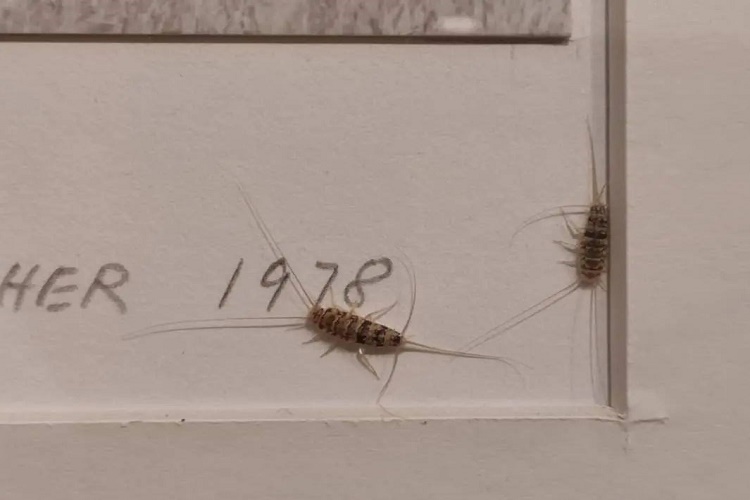
Verminous insects in Tehran Museum of Contemporary Art!
Referring to the insect infestation in one of the works in Tehran Museum of contemporary art, an art expert attributed this situation to the period of lockdown, renovation of the museum, bringing in installation tools, and relocation of the museum’s works.
According to Shahraranews agency, a video was published on social media, in which insects were seen all over one of the works displayed in the museum. In this respect, director of the museum announced that action is being taken.
The new exhibition of the Tehran Museum of Contemporary Arts, which has received international feedback due to the display of works that have been exhibited again after decades, has now been accompanied by a margin called the attack of insects on some pieces.
Many of the works displayed in this exhibition have been in the Tehran Museum of Contemporary Art’s multi-billion-dollar treasury for decades, one of the world’s richest art museums. In this exhibition, more than 130 works of 34 contemporary western artists are displayed; many are unique masterpieces of minimalist and conceptual art of the 19th and 20th centuries in the United States of America and Europe.
Following the publication of this news, Saeed Fallahfar, an art expert, published a video on his virtual space, calling the emergence of the mentioned event unfortunate. He said that the release of a video of the pestilence of insects in one of the frames displayed in the Museum of Contemporary Art has caused concern and protest among the people of culture and art.
This artwork expert continued: The critical point is that these insects multiply and spread over several months, indicating that their emergence was not instantaneous. More investigations and a more extended period are needed for a more nuanced pathology.
Insisting that the damage caused by the attack of vermin on the exhibition works does not end only with their chewing and corrosion, he added: “Let us not forget that any harm to the credibility and trust of the people in the Museum of Contemporary Art is the most considerable bitter damage that a cultural place can suffer, and history can deal with it. (Shahrara news agency, Amordad 24)