

Unprofessional restorations and excessive interventions have significantly altered the Tomb of Jamasp in Khafr County, causing irreversible damage to this Sassanian heritage site.
Siavash Arya, a cultural heritage activist and researcher, told ISNA that such restorations, which have increased in recent years, often harm historic monuments rather than preserving them. He criticized the current contractual approach, in which inexperienced contractors—often civil engineers or restorers with limited qualifications—are chosen based on low bids or connections, leading to repeated damage to invaluable sites.
Arya noted that many cultural monuments have suffered from these practices, including the Achaemenid soldier statue at Persepolis, the Sassanian Chahartaqi of Rostaq Darab, the Poskan fortress in Kazerun, the Chahartaqi of Sahra-ye Pooshanj in Darab, Saadi’s tomb in Shiraz, the Kheyrabad bridge in Kohgiluyeh and Boyer-Ahmad, and the Bam Citadel in Kerman.
He emphasized the urgent need for professional, standards-based restoration to protect Iran’s irreplaceable historical and cultural heritage.
Siavash Arya, a cultural heritage activist, stated that unprofessional and excessive restorations at the Tomb of Jamasp in Khafr County have caused irreversible damage, altering the monument’s original structure and form. Experts argue that the interventions created a “new” structure with no harmony to the historical monument or standard restoration methods.
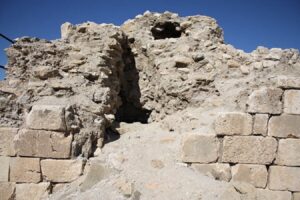
Arya described the work as careless and poorly executed, noting that it disregards international heritage preservation charters and has drawn widespread criticism from experts. He likened the damage to the saying, “He who tried to lift it under the eyebrow, blinded the eye,” highlighting how excessive interventions have destroyed the original structure.
He recalled that during his visit in Bahman 1402 (January 2024), he raised concerns about the first phase of restorations, but the second phase not only failed to correct errors but caused further irreversible damage. Arya reported these issues to the Deputy of the Fars Provincial Office of Cultural Heritage, Tourism, and Handicrafts, who confirmed a site visit will soon be conducted to assess the problems, noting that the restorations were carried out under previous management.
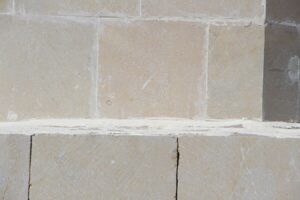
Cultural heritage activist Siavash Arya spoke with Siamak Alizadeh, PhD in Conservation and Restoration, about the Tomb of Jamasp’s restoration. After reviewing photos, Alizadeh strongly criticized the work:
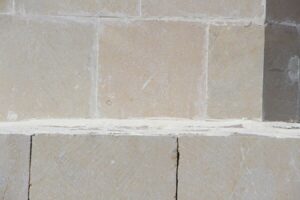
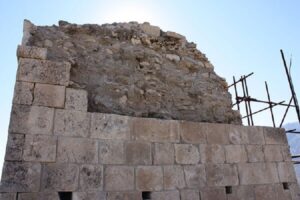
He questioned the basis for covering the tomb’s roof in an octagonal shape with incongruous stone, transforming it into a “new” structure rather than preserving its original ancient form. He emphasized that monuments from the Elamite to early Islamic periods, due to prior damage, should only undergo structural reinforcement and careful preservation, not full reconstruction without clear evidence.
Alizadeh also condemned the use of Islamic-era gravestones from a nearby cemetery, some with valuable inscriptions, as materials for the tomb’s walls. “Relocating and reusing these stones, which have artistic, religious, and historical value in their original context, is a serious violation and cannot be justified.”
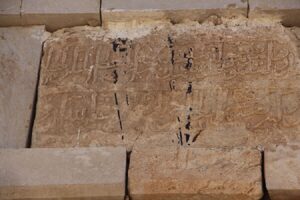
He further noted that the stonework and mortar were poorly executed, damaging the monument’s appearance and breaking the unity of the original dry-stone construction. According to Alizadeh, the restoration gives the impression the tomb has been repurposed, rather than preserving its historical integrity and authentic value.
Siamak Alizadeh expressed serious concern regarding the restoration of the Tomb of Jamasp, stating: “I wish interventions on historic monuments were carried out with more precision, backed by thorough and comprehensive studies. Restoration work should only be entrusted to skilled contractors under strict technical and aesthetic supervision, with approval from the Ministry of Cultural Heritage’s technical council. Assigning such projects to inexperienced individuals results in rushed, low-quality work that can damage the monument. Ideally, rather than extensive restoration and wasted resources, the focus should have been on preservation and structural reinforcement.”
Cultural heritage activist Siavash Arya explained that the Tomb of Jamasp is made of finely cut stones and wind-shaped rocks, forming a cubic platform measuring roughly 5.5 meters per side and 6 meters high. The tomb has no windows, and its entrance is constructed of cut stone and plaster. Originating from the Sassanian period, the tomb retained its original form into the Islamic era, later acquiring a religious function during the Ilkhanid period. Archaeologists note that multiple Islamic-era restorations have compromised its ancient identity, and some believe that, based on roof cavities observed before the recent restorations, the tomb originally served as a Sassanian fire temple.
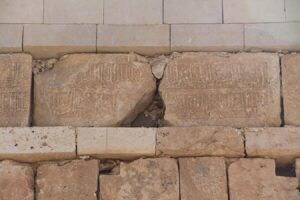
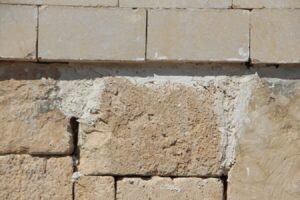
Alizadeh expressed his regret that excessive and inappropriate interventions have made it impossible to ascertain the tomb’s original historical function. “The unprincipled restorations have damaged and altered the structure, leaving irreversible harm. So far, no comprehensive research has been conducted on this Sassanian monument, and its original Sassanian purpose remains unclear.”
Cultural heritage activist Siavash Arya added that the Tomb of Jamasp is located about 85 kilometers southeast of Shiraz, along the Shiraz–Jahrom road, on the right side of the main road, seven kilometers from Khafr County, in the village of Karadeh. It lies roughly 1,500 meters from the Gareh district, accessible via a narrow, uneven dirt path through scenic orchards. The tomb was officially registered as a national heritage site on 2 Mehr 1353 (24 September 1974) under registration number 986.