

Kaykhosrow Tirandaz was the man behind the first power plant that brought electric light into the homes of Yazd. In 1927 (1306 SH), he established the city’s first electricity facility, completing the installation of its technical equipment three years later. Thanks to his determination, the people of Yazd saw their homes illuminated by electric lamps for the first time.
Electrical wiring in Yazd had begun in the early 1920s under the supervision of a Russian engineer. Building on that foundation, Tirandaz promised that he would soon make electricity available to the entire city. He kept that promise. After considerable effort, he succeeded in powering Yazd. Even then, he never considered his work finished; he continued to refine and upgrade the machinery of the plant until his life was cut short by an accident.
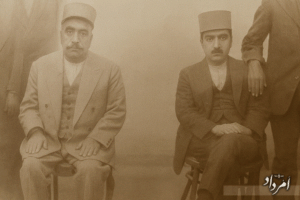
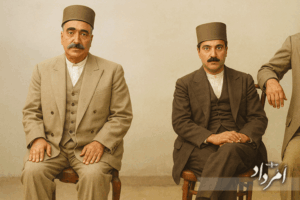
The generator he installed had a capacity of 50 kilowatts, lighting up the Amir Chakhmaq Square, the Gazar-gah neighborhood, and Pir-e Borj within a two-kilometer radius. Today, the engine room is the only surviving part of the original plant. It was officially registered on Iran’s National Heritage List in 2021 (1400 SH).
After his death, his son, the late Mehraban Kavousi, carried on the mission, playing a key role in advancing Yazd’s electrification and completing the work his father had begun.
The late Kaykhosrow Tirandaz was survived by three sons, each of whom chose a different family name: Mehraban Kavousi, Bahram Irani, and Tirandaz Pouriran. He also left behind three daughters: Nazbanoo, Mehrbanoo, and Shirin. Among his children, Bahram Irani served for many years as the deputy and senior manager of the Yazd power plant. When he later traveled to Tehran to purchase property jointly for all the brothers, he entrusted the responsibilities in Yazd to his brother Mehrban.
Different accounts exist regarding the circumstances of Kaykhosrow Tirandaz’s death. One version claims he was injured when a piece of machinery in the plant overturned. Another attributes the harm to malicious interference from rival factory owners, whose hostility caused him such distress that it led to a fatal stroke. The third—and more reliable—account tells that he was traveling to Isfahan with his son Mehraban to sign a contract when he suffered an accident at the city’s bus depot. He passed away in Mehr 1311 SH (September–October 1932). His memory is warmly remembered.