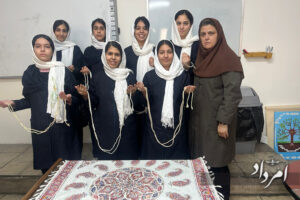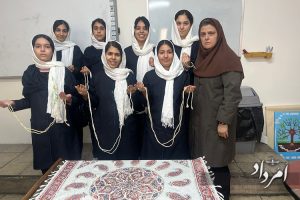


At the Abangan ceremony hosted by the Research Institute of Cultural Heritage and Tourism, Mobed Pedram Soroushpour spoke about the goddess Anahita and her significance in Iranian culture, highlighting her connection to water, beauty, justice, and wisdom. He also stressed the importance of equality, critical thinking, and social responsibility for shaping Iran’s future.
Opening his speech, he said: “It is an honor to speak about the Abangan Festival and the mythological goddess Anahita. Studies show that she is a goddess of powerful, pure, and unadorned waters, symbolizing both nature and virtue.”
Mobed Soroushpour added: “Anahita’s origins likely predate Zoroastrianism, especially revered in Pars and western Iran. Over time, her image merged with Zoroastrian beliefs, becoming a widespread and enduring figure across the country.”
According to the Aban Yasht, she is described as:
“A beautiful, powerful, and noble maiden with a slender waist, adorned with numerous ornaments from the ankle down, wearing a richly pleated and golden robe.”
Anahita in the Avesta and Pahlavi Texts
In the Aban Yasht and Pahlavi texts, Anahita—true to her name—represents sacred water (Ab-Zor), fertility, and purity. She is often depicted as a healer and protector of justice and kings, a purifier of the soul, and a figure of strength and power.
In essence, Anahita is a goddess of beauty, wisdom, and love, closely associated in some traits with the deity Ashi. Other divine collaborators in the Avesta include Spandarmad, Aban, Din, Ard, and Mantra Spand. Both Anahita and Ashi are portrayed as beautiful goddesses connected to the cosmic order.
The Farvardin Yasht explicitly calls Anahita a creation of Ahura Mazda, who himself honors her with hom mixed with milk and barsam by the sacred river Daitya (later known as daena). While the male water deity Apam Napat is mentioned, his role is secondary, underscoring Anahita’s prominent status as the female divinity of waters.

The Splendor of the Goddess Anahita in Ancient Iran
At the Abangan ceremony, Mobed Pedram Soroushpour spoke about Anahita’s prominent role in Iranian culture, noting that her temples were among the most magnificent in ancient Iran, with the most important located in Hamedan, followed by Susa and later Kangavar.
The Thirteenth Yasht mentions Fereydun unbinding the bonds of daena, a reference to Anahita, reflecting the Zoroastrian belief that at death, a person’s conscience—or daena —appears as a beautiful maiden to guide them.
Anahita maintained a high status throughout history, reaching a peak during the Achaemenid era when her worship intertwined with Zoroastrian practices. Xenophon records that while Cyrus the Great primarily worshipped Ahura Mazda, he also honored other deities, particularly Anahita, celebrating her through special festivals.
Mobed Soroushpour highlighted the contributions of Artaxerxes I and his daughter Parysatis, mother of Artaxerxes II, in enhancing the grandeur of Anahita’s temples, especially in Ecbatana. By the time of Artaxerxes II, Anahita was officially recognized alongside Mithra and Ahura Mazda, forming a key triad prominently depicted in Achaemenid inscriptions.
Historical accounts of Anahita under the Seleucids mostly highlight the plundering of her temples, especially the one in Susa. One well-known story recounts a Seleucid king who, despite an empty treasury, tried to raid the Susa temple. The local people resisted fiercely, he failed, and on his return, he suffered mental illness and eventually died—a fate recorded as divine retribution for his actions.
During the Parthian era, many Anahita temples, including those in Kangavar and near the Euphrates, continued to function, maintaining her worship. Importantly, even the Susa temple, previously looted, was restored and regained its former grandeur.
Zoroastrianism and the Enduring Presence of Anahita in Iranian Culture
At the Abangan commemoration, Mobed Pedram Soroushpour emphasized the Sassanian era as a defining period when Zoroastrian priests fostered religious cohesion, embedding Zoroastrian beliefs deeply within Iranian culture. Despite debates and differing views, these beliefs gradually influenced all aspects of social and cultural life.
Anahita’s worship remained strong during this time. In Istakhr, she was venerated, and Shapur I built a fire temple in Bishapur, believed to honor her. Its square design, four entrances, and water channels flowing into the temple symbolized her elevated status.
Her presence is also visible in Sassanian art. At Naqsh-e Rostam, a goddess resembling Anahita presents the royal ring to King Narseh, matching descriptions in the Aban Yasht. At Taq-e Bostan, she appears holding a water vessel during Khosrow II’s investiture, reflecting her enduring cultural significance. Today, Anahita’s legacy continues through the month of Aban, the day of Aban, and the Abangan festival.
The Role of Women in Iranian Culture
Mobed Soroushpour emphasized that the discussion should extend beyond the goddess Anahita to the broader role of women in Iranian culture. One fundamental measure of any culture is its view of women and the level of equality between men and women.
In Iranian tradition, Anahita, as described in the Aban Yasht, embodies beauty, strength, wisdom, and the role of protector of kings. Rulers sought her sanction to legitimize their authority; she assessed their justice and even held the powerful accountable. Her wisdom, fairness, and grandeur reflect an ancient Iranian culture that valued women, allowing them to achieve positions comparable to men—thousands of years ago.
Soroushpour noted that while this culture was not without its challenges, texts like the Aban Yasht clearly demonstrate Anahita’s prominence. Historical figures such as Parysatis, who acted alongside Anahita, show that women could influence governance and hold authority even in a society shaped by war and power. Therefore, Anahita’s significance symbolizes not only the stature of a goddess but also the respect and status accorded to women in Iranian culture.

Justice and Wisdom: Building Iran’s Future
Soroushpour described the Research Institute of Cultural Heritage and Tourism as a vital intellectual cornerstone for Iran. He highlighted the quiet yet profound work done there, which encourages society, leaders, and policymakers to reflect deeply and base the nation’s future on reason and insight.
He pointed out that Iran still faces challenges regarding the status of women. Historically, Iranian culture recognized women as equals, sometimes elevating goddesses like Anahita, yet always respecting their dignity. Anahita’s wisdom, strength, and beauty exemplify this perspective—a sharp contrast to today’s tendencies in parts of society to reduce women to mere objects of desire.
Soroushpour warned that institutionalized discrimination is the gravest threat to society, a danger the country is currently facing. He stressed the importance of the humanities and the responsibility of those who work in them, urging the preservation of dialogue, thought, and intellectual engagement as the foundation for a better future.
This Land Has Lived with Anahita
Mobed Pedram Soroushpour highlighted the deep divide between Iran’s cultural past and today’s religious and legal systems. Yet he emphasized that the people, rooted in this heritage, remain outside this gap. Culture is anchored in enduring roots that cannot be easily uprooted.
He noted that this land has lived with the goddess Anahita for thousands of years, understanding that men and women are meant to live and work side by side. Ignoring this truth creates a profound disconnect between the people and those in power.
Religion Dominated by Men Today
Soroushpour criticized today’s male-dominated religious structures, recalling that in the Achaemenid era, religious education centers trained girls and boys together. He questioned how decision-making on laws and religious rulings became restricted to men in a society where women make up half the population.
He also warned of the consequences of discriminatory laws, citing that hundreds of girls are killed annually by their fathers, a result of laws enacted in the name of religion or jurisprudence—laws that urgently need review.
Closure of the House of Thinkers: A Blow to Intellectual Freedom
Mobed Pedram Soroushpour concluded his speech by addressing a troubling recent event. He expressed hope for change but noted that he could not end the celebration without acknowledging a serious concern.
Recently, the House of Thinkers in the humanities was closed. Soroushpour stressed that the future of the country depends on scholars in the humanities, who build its intellectual foundations. The video circulating online, showing the symbolic destruction of this center, represented more than the breaking of a structure—it symbolized the restriction of thought. Though such acts may fail in practice, they leave a mark in history.
He added that while a mayor might not fully grasp the significance, cultural and academic authorities—including the Ministers of Culture, Science, and Heritage, as well as the President—should respond decisively. At the very least, they should support those who defend freedom of thought and the intellectual future of the nation.
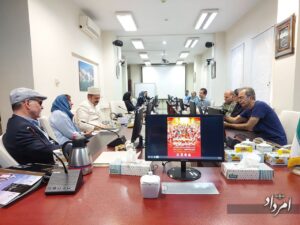
The event, “From Abangan to the Small Festival”, was held at Parse Hall of the Institute of Anthropology and included speakers such as Sarvar Taraporevala, Mehrdad Arabestani, Abbas Tahvildar, and Mobed Soroushpour. They discussed ceremonies, the role of women, and the relationship between culture and society. Maryam Dara, assistant professor at the Research Institute of Cultural Heritage and Tourism and an expert in ancient languages, chaired the session. She is an active researcher in Iran’s cultural heritage, inscriptions, and historical texts.