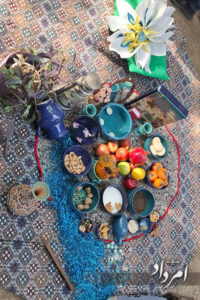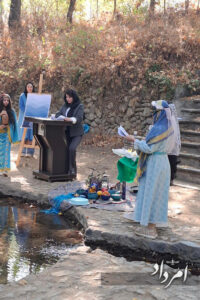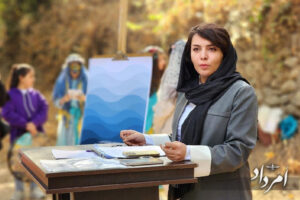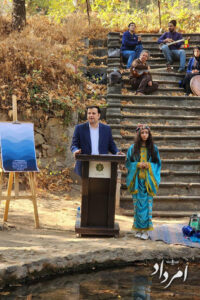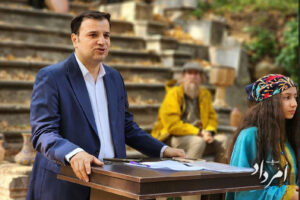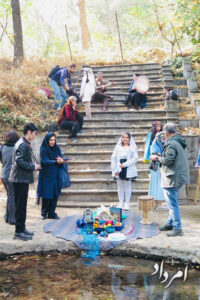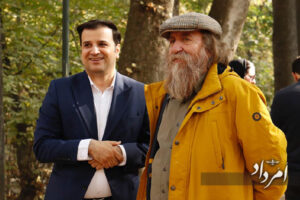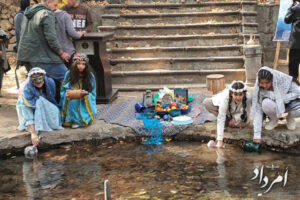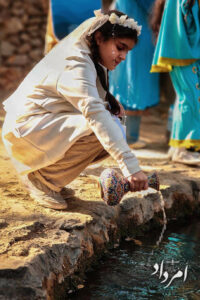


The special program Abangan, exploring the philosophy of this ancient Iranian festival, was held on 16 Aban (November 7, 2025) by the National Committee of Iranian Museums and the Sa’dabad Historical and Cultural Complex.
Beyond a traditional celebration, the ceremony served as a platform for ecological and heritage dialogue, aiming to revive intangible cultural heritage linked to water and raise awareness about contemporary water crises. By highlighting water and qanat systems in the capital, the event became a meaningful environmental and heritage-focused initiative.
Abangan, one of Iran’s twelve ancient festivals, honors Anahita and emphasizes water as the second sacred element after fire, grounding the event in the ethical and philosophical traditions of ancient Iran.
The Sa’dabad Complex, with its spring and traditional water management system, was chosen as a strategic location, illustrating the link between ancient qanat-based sustainability and modern urban resource management. Seyed Mohsen Mir, director of Sa’dabad Palace, highlighted the role of museums in promoting cultural traditions alongside sustainable water practices.
Sa’dabad, on the southern slopes of the Alborz Mountains and northern Tehran, forms a micro-aquatic ecosystem reliant on both underground and surface waters. The Sa’dabad spring, fed by rainfall and Tochal snowmelt, sustains the historic green spaces and serves as an ecological indicator of the region’s hydrology.
A network of qanats historically transported water from higher elevations to the palaces and gardens. Beyond simple channels, these qanats minimized evaporation and recharged aquifers, demonstrating a sophisticated engineering system for sustainable water management in arid climates. Highlighting this system showed its relevance as a practical, climate-adapted technology today.
Seyed Ahmad Mohit Tabatabai’s keynote, on the “Bride of the Qanat,” emphasized qanats not only as UNESCO World Heritage monuments but also as models for drought resilience and sustainable urban water supply. Meanwhile, Fatemeh Rezaei’s study on the “Abangan Festival Table Ritual and Symbolism” added a scholarly ethnographic perspective, enriching the understanding of this cultural heritage.
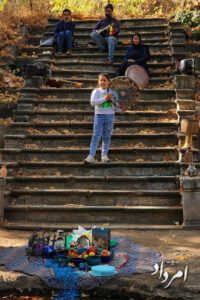
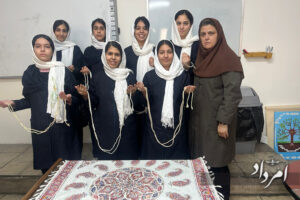
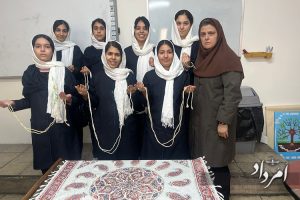
The interactive children’s performance, designed by Fatemeh Rezaei, strategically connected heritage transmission with youth engagement, serving as informal education to foster environmental responsibility. Oversight by Hengameh Niavarani, head of Sa’dabad Palace’s Children and Youth Visit Program, highlighted institutional commitment to educating young audiences. The symbolic “Boat of Wishes” activity, releasing paper boats into the qanat, strengthened emotional ties to water resources and encouraged civic participation in heritage preservation.
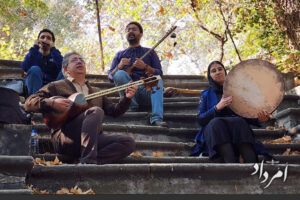
By combining music and performances with the flowing spring and qanat, the program created an immersive sensory experience. Storytelling, Shahnameh recitation, Yasht chanting, and Hafez reading emphasized water’s deep cultural and literary significance. Musical contributions by the Rameshgaran Asha ensemble (Azam Ghasemi, Rouhollah Safa, Marsana Ahmadi, Sepehr Pirastani, Amir-Asha Golbehi) and daf performance by Asal Amani enriched the program. Individual Yasht recitations by Armita Rezaei and group performances by Armita Rezaei, Nafas Mirza, Giti Ghorbani, Saba Sabbagha, Marsana Ahmadi, and Parmin Rahbari reinforced ritual, artistic, and national identity.
Interactive art by Golbarg Shahmansouri, Armita Rezaei, Marsana Ahmadi, Giti Ghorbani, and Saba Sabbagha served as a hands-on tool to instill environmental responsibility, with Saba Sabbagha facilitating the children’s section. The festival concluded with a public discussion on water resource revival, transforming the event into a civic platform for sustainable water management. Afterward, organizers and Golestan Palace staff collected the paper boats from the qanat, completing the ceremony.
The Abangan program at Sa’dabad demonstrated a successful fusion of ancient rituals, environmental awareness, and modern museology, offering a model for heritage activism in a contemporary urban context.