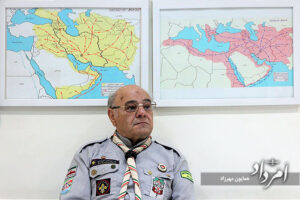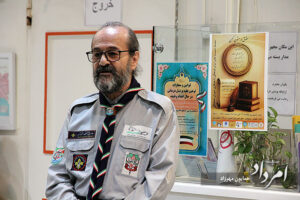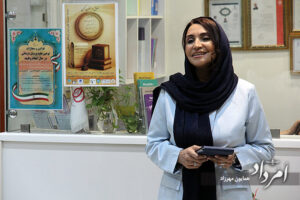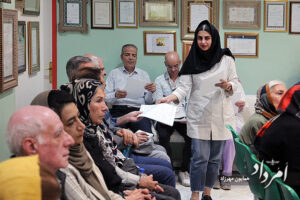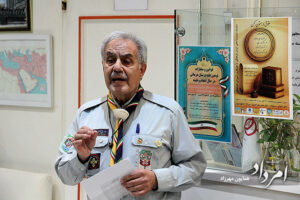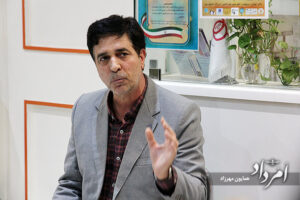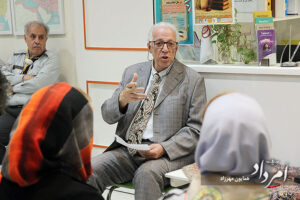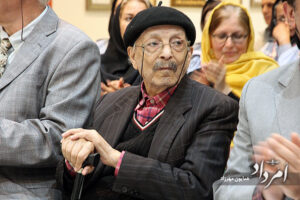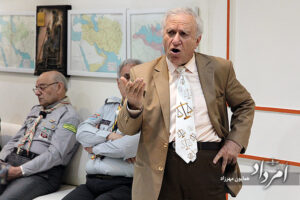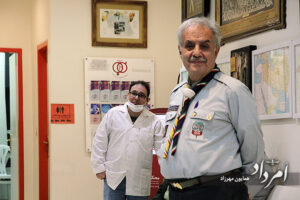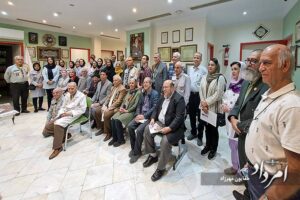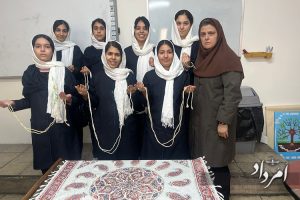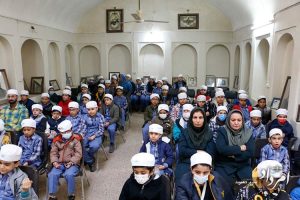


The seminar “Rights in Ancient Texts” brought together several scholars of Iranology. Organized in collaboration with the “Coordination Council” at the “Iranian Cultural Foundation,” this session was part of an ongoing series of cultural events. It was held on the afternoon of Sunday, 11 Mehr, with the participation of history and culture enthusiasts.
Smiling was considered a civic right
Professor Dariush Farhoud, a distinguished genetics scholar, began his talk with “In the name of the Lord of Ethics” and reflected on Achaemenid governance: “Cyrus the Great founded the Persian Empire, but it was Darius who truly established the framework of statecraft—introducing postal services, minting coins, organizing provinces, collecting taxes, and constructing roads.”
He further highlighted proper ways of living, noting: “From a medical perspective, the greatest threats to human well-being are violence, resentment, and aggression. These three fuel four major health issues: cardiovascular diseases, cancer, metabolic disorders, and mental illnesses.”
Professor Farhoud emphasized the roots of human suffering, identifying violence, resentment, and aggression as drivers of four major illnesses: cardiovascular, cancer, metabolic, and mental disorders. He explained that the remedy is simple but challenging: lower expectations, raise tolerance, accept reality, be adaptable, and build resilience—together forming the foundation of a healthy lifestyle.
Referring to modern research, he noted that living in harmony with our body’s natural rhythms—sleep, diet, and balance—is essential for well-being. He lamented that today’s world remains dominated by conflict and aggression, questioning why humanity resists ethics and kindness. “Smiling,” he added, “is a basic civic right we must not forget.”
Cyrus’s Charter: An Enduring Civilizational Legacy
Dr. Mohammad-Ali Dadkhah, a legal scholar, reflected on heroism in Iranian mythology: “Some consider Arash greater than Rostam because he defined Iran’s borders, creating space for growth before other deeds.”
He cited the Shahnameh, highlighting the battle between Rostam and Esfandiar, whose dialogue teaches:
“Peace is due to all people; may he perish who seeks war.”
Dadkhah noted that the epic depicts both order and chaos: Jamshed establishes Nowruz, Zahhak brings disorder, and Kaveh’s rebellion restores justice, reflecting ancient Iranian values.
On historical civilization, he praised Cyrus the Great: “Cyrus created a fair taxation system, choosing Ruz-e Baz on Nowruz, aligning civic duty with cultural order—a remarkable achievement.” He concluded: “Cyrus’s charter remains an enduring civilizational value. History flows continuously; as Hegel observed, world history began with Iran under Cyrus.”
Earlier, Professor Dariush Faroud emphasized lifestyle and wellbeing. He noted violence, anger, and resentment as roots of four major illnesses: cardiovascular, cancer, metabolic, and mental disorders. Remedies, he said, include lowering expectations, building resilience, accepting reality, and living in harmony with our body’s rhythms—sleep, nutrition, and order.
Faroud concluded: “Our world is filled with aggression, yet morality teaches peace. And why do we avoid smiling? Smiling is a basic civic right.”
Public Rights in the Shahnameh
Dr. Mohammad Rasouli, a legal scholar and Shahnameh expert, began by thanking Professor Dariush Faroud: “He dedicates his time and resources to promoting Iranian culture, and we owe him our gratitude.”
Rasouli highlighted the legal dimension of the Shahnameh: “Contrary to the old view of it as mere myth, the Shahnameh clearly addresses rights. Scholars who have devoted themselves to its study have shown that it reflects legal principles.”
He distinguished between private and public law: “Private law regulates relations between individuals, while public law governs rulers and citizens. Although often thought to emerge with the French Revolution, public law is evident in the Shahnameh.”
The epic illustrates political institutions, social structures, citizenship, and human rights. It presents a fully organized society, encompassing governance, sovereignty, and even Iranian nationalism rooted in defined borders.
Dr. Mohammad Rasouli concluded: “In the Shahnameh, the council—called the ‘Anjoman’—represents the people. Every king who rules swears to uphold public rights.”
Iranologist Dariush Shahbazi, another speaker, remarked: “Iran has a rich cultural heritage spanning millennia. Today, I focus on the Sasanian era.”
He explained its duality: “The Sasanians were a powerful, civilized state, yet most people lived under harsh conditions. Artisans and farmers faced struggles, while kings claimed legitimacy through divine glory and absolute authority. Only 2% of society were nobles and royalty; the remaining 98% endured hardships, sometimes seeking refuge from heavy taxes.”
Shahbazi added: “The Sasanian society eventually declined, partly due to long wars with Rome, yet their influence extended to China, Europe, and Africa.”
Upholding Ethics
Manouchehr Vasayegh, member of the Coordination Council of Iran-e Farhangi and head of Tehran’s scouting program, stressed the importance of ethics in a brief address: “We must harmonize contemporary ethics with the wisdom of our ancestors. This is how we create a healthier society. Ethics forms the foundation of democracy, so moral integrity must always guide us.”
He added, “Even planting a single flower can bring meaningful change to our daily lives.”
The session was moderated by Maryam Serajian, and included two vocal performances by Mr. Nik, who also shared one of his own poems with the audience.