

In recent decades, Iranian immigrants—particularly in Southern U.S. states—have revived national traditions such as Mehregan through cultural festivals and community gatherings.
According to accounts, notes, and works from post-1979 (1357) newcomers, immigrants who arrived in the 1970s—influenced by the allure of Hollywood films—settled around Hollywood, then Los Angeles and Westwood, and later Beverly Hills, all within the Greater Los Angeles area. These communities flourished alongside similar gatherings in New York, leading to lively Sizdah Bedar picnics and extravagant Mehregan celebrations in Los Angeles, San Diego, and especially in Orange County, centered in the peaceful yet active city of Irvine.
This report highlights several major hubs of Iranian cultural activity where Mehregan celebrations are particularly prominent.
Mehregan at the Heart of Southern California’s Zoroastrian Community
Orange County, with its vibrant, interconnected cities, scenic John Wayne Airport, mild Mediterranean climate, and attractive Pacific coast beaches, has become one of the most sought-after areas for Iranian immigrants in the U.S. after the 1979 Revolution. Even those who had settled earlier in Hollywood, Westwood, and Beverly Hills began to gravitate toward this region.
In spring 1979 (1357), six devoted Zoroastrian women came together with the vision of creating a dignified community center. Their efforts resulted in the founding of the Zoroastrian Center of California, which today welcomes thousands of Iranian and non-Iranian visitors interested in Zoroastrian traditions.
Located in Westminster, the center reflects the foresight and dedication of these pioneering women. It boasts a fully equipped facility for religious and cultural events, including a large conference and gathering hall, ample parking, classrooms, a fire temple, and other essential amenities. Its entrance adorned with the Faravahar symbol provides a welcoming and symbolic gateway for all who visit.
Zoroastrian calendars are published regularly, and festivals are consistently celebrated. During Gahambars, participants traditionally bring homemade breads, stews, and sweets to share with the community. The celebration of Nowruz, Zoroaster’s birthday, Sizdah Bedar, Mehregan, Sadeh, Chaharshanbe Suri, and Sedreh-Pooshi forms the heart of Zoroastrian activities in Southern California, attracting the largest gatherings of Iranian-Americans, enthusiasts, and international visitors.
This year’s Mehregan festival, held on Saturday, October 4, 2025 (12 Mehr 1404), from 6 PM to 10 PM, drew over 1,000 attendees, including Zoroastrians of other nationalities and local American residents. The crowd was so large that participants often had to exit the hall and vacate parking spaces to make room for late arrivals.
The event opened with a communal performance of Iran’s national anthem, “Ey Iran,” followed by music inspired by Zoroastrian ceremonies in English and a narration of the legend of Kaveh and Bīvarasb. The festival organizers and management team were also formally introduced.
A centerpiece of the celebration was the Meh table, featuring a two-meter bronze statue of Cyrus the Great, crafted and presented by Mehryar Behnam-Abadian, along with two 1.5-meter fiberglass Faravahars, ten Persepolis-style column capitals, and numerous Achaemenid plaster designs, all newly displayed at this lively Zoroastrian cultural center.
Women’s Daf Ensemble, Children’s Dance, and the Leadership of Southern California’s Zoroastrian Center
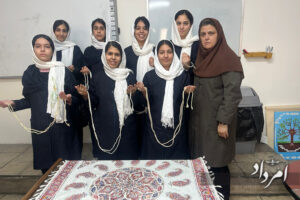
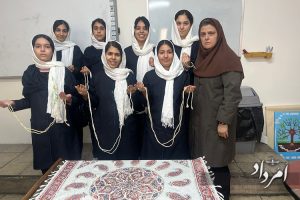
The women’s daf ensemble and performances by children and young girls dressed in traditional costumes brought a distinctive charm to this year’s Mehregan celebration at the Zoroastrian Center of Southern California.
This nonprofit organization is managed through three administrative teams in collaboration with a seven-member board of trustees, as follows:
Board of Trustees – 7th Term of the Zoroastrian Center of California:
Shahnaz Ghabibi, Ardeshir Baghkhaian, Behrooz Mehrkhodavandi, Bijan Pourjamasb, Dariush Bastani, Rostam Shirmardian, Houshang Farahmand
Los Angeles Management Team:
Azita Afshari, Asha Lerkelantari, Ardeshir Bakhtian, Kourosh Keshavarzi, Keykavous Varjavand, Kiarash Tirandazi, Keyvan Hoor
San Diego Management Team:
Armita Davirvala, Zhaleh Faramarz, Parisa Ormazdi, Parinaz Parichehr, Mitra Javdan, Ramak Rahnamoon, Ramin Amani
Orange County Management Team:
Mandana Pishdadi, Ardeshir Jamshidi, Armin Salamati, Jahangir Mehrkhodavandi, Jamshid Jamshidi, Sasan Soroushi, Keyvan Falahati
Mehregan at the Heart of Irvine’s Multicultural Community
In the United States, senior citizens are given special attention, often through dedicated senior centers that offer programs to engage people over fifty. These activities include dance classes, computer and media workshops, painting, health and wellness sessions, language lessons, and both indoor and outdoor recreational programs. Younger participants are also warmly welcomed to join these activities.
A major goal of these centers is to foster cultural exchange among different communities, exemplified by the Irvine Multicultural Culture Association. The Irvine branch is one of the most active and notable centers in this regard.
The Iranian section of the center was established in the 1980s by a group of Iranian expatriates. In recent years, under the guidance of Neda Alavi, programs have been designed to engage both senior adults and younger participants. This year, Mehrbanu Lily Nobel took the lead in organizing activities for the Iranian community, successfully hosting the Mehregan celebration.
The festival program included a presentation of the legend of Fereydun and Bīvarasb and the victory of Kaveh the Blacksmith, explanations of how Mehregan is celebrated among various Aryan communities, and a screening of related films. Attendees also enjoyed live music, traditional dances performed by Mehrbanu Nobel’s talented daughter, and refreshments including tea and sweets, creating a lively and memorable celebration of Iranian culture in Irvine.
Mehregan Shines in Irvine
In 1987 (1366 SH), six successful Iranian American entrepreneurs in Orange County, Southern California founded NIPOC (Network of Iranian American Professionals of Orange County) to strengthen their connection with the local Iranian American community. With the support of all founders and the guidance of Dr. Farrokh Shokooh, a prominent university professor and technology entrepreneur, the organization quickly established a solid foundation.
As part of its mission, NIPOC aimed to organize a prestigious cultural festival, an initiative proposed by Mehrayar Majid (Nik) Azartash. Several names were considered, and ultimately, the founders approved Mehregan Festival based on the suggestion of Mehrayar and Dr. Shokooh.
The festival’s popularity grew rapidly. By 1994, it drew 6,400 participants, and by 1999, 20,000 people attended over two days. Forecasts for 2010 and 2011 expected crowds to reach 30,000. However, political challenges in those years cast uncertainty over the event, and during the Green Movement protests of 2009 (1388 SH), the NIPOC Mehregan celebration faced severe disruption.
Revival of Mehregan: NIPOC’s Phoenix Rises
Despite previous challenges, the author, together with colleagues managing websites like Ira, House of Iran, and provincial networks, founded “Autumn Gathering” as a temporary replacement for the Mehregan Festival. However, after two successful years, political pressures forced its suspension.
In 2024 (1403 SH), the Mehregan phoenix of NIPOC rose once more with the official Mehregan anthem, “Greetings to Iran and Iranians, Happy Mehregan to You”, composed by the author from the heart of Iranian cultural heritage. The festival took place in Great Park, Irvine, one of the largest parks in the U.S., drawing widespread enthusiasm from locals and neighboring communities. Its success inspired NIPOC organizers to plan even more ambitious programs in the coming years.
This year, the NIPOC Mehregan Festival was realized through the efforts of over 600 volunteers, including experienced former NIPOC directors. Led by Mehrayar Dr. Farrokh Shokooh, Mehrayar Majid Azartash, and Mehrbanu Parto Nikpour, with the support of past festival directors, the event reached unprecedented heights, according to Mehrbanu Parto, NIPOC’s president, in a televised interview.
From the reporter’s perspective, no festival in Iranian history—spanning the Achaemenid, Parthian, Sassanid, Samanid, Ghaznavid, Seljuk, Khwarazmian, Buyid, Ziyarid, or even Pahlavi eras—has ever seen a celebration of this scale worldwide, with ticket prices ranging from $40 to $220 and attendance including the mayor, city council members, police chief, and other officials from Irvine and across Orange County.
Mehregan Festival in Irvine: A Grand Celebration of Cyrus the Great and Iranian Heritage
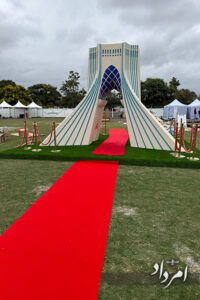
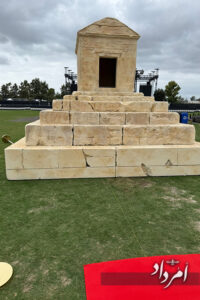
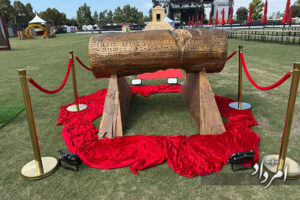
A centerpiece of the festival was the giant replica of Cyrus the Great’s tomb, reminiscent of the iconic tower at Shahyad Square (now Azadi Square), symbolizing the Cyrus Cylinder and human rights—one of the world’s most treasured monuments. This striking installation became a focal point of the celebration.
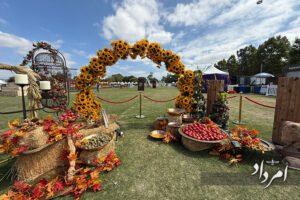
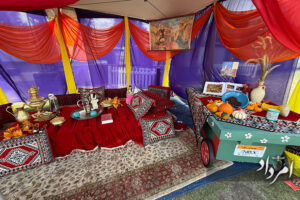
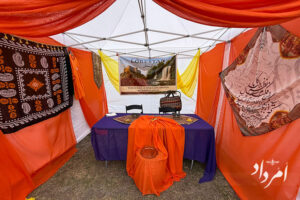
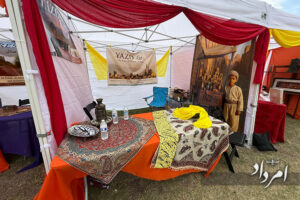
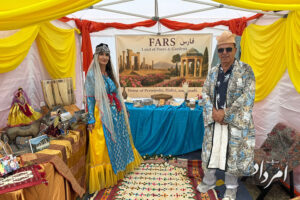
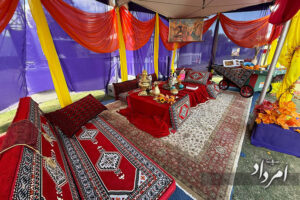
In addition to the Mehregan feast, the festival featured booths and tents highlighting the cultural heritage of Iran’s various provinces, along with traditional Iranian dishes, drinks, sweets, and ice creams, offering a full cultural experience to visitors.
The festival came alive with live daf performances, group dances, and traditional music, where performers and guests, dressed in vibrant traditional costumes, joined in clapping, dancing, and festive celebrations, creating an atmosphere of joy and excitement.
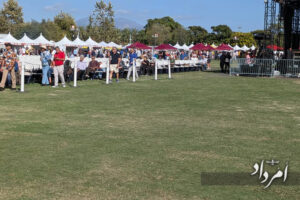
Although official attendance numbers are not yet released, it is estimated that over 15,000 people, including both Iranian and non-Iranian attendees, visited the festival over the two-day event, held from 2 PM to 10 PM at Great Park, Irvine. The enthusiasm for Iranian cuisine and beverages remained high throughout the festival.
The event was graced by prominent guests: the city mayor on the first day and the police chief on the second day—a distinguished young leader of Iranian and Egyptian heritage—who addressed the audience while waving a Mehregan flag inscribed in Persian, Arabic, and official languages, adding a ceremonial and memorable dimension to the 2024 Mehregan Festival in Irvine.
Mehregan at Irvine’s Annual Global Village Celebration
The Global Village is a vibrant, recreational festival held each year in Mehr (fall) in Irvine. The event is organized under the leadership of the city mayor, with active involvement from local social and economic community members.
This year, the cultural festivities took place at the vast Great Park of Irvine, the same venue that hosts the Mehregan Festival. Historically, this site was the administrative and operational hub of the California Air Force and a hangar for American warplanes until the end of World War II. Later, it became renowned as a museum for vintage aircraft, including planes from former enemy nations like Japan.
At the festival, residents of all ethnic backgrounds in Orange County, especially those from Irvine, present their arts, crafts, and distinctive cultural traditions. Exhibitions by artists and performances from various social and cultural organizations remain a key and recurring feature of this annual event.
At the festival, the “Iran Room”, usually organized under the “Multicultural Center”, had its own dedicated booth, separate from the main stage events. This space focused on presenting Iranian culture, with a special emphasis on the Mehregan celebration. A central feature, called the “Mehregan Table,” was decorated with the Drafsh Kavian (the ancient Persian flag) and other historical artifacts, giving the pavilion a distinguished and ceremonial presence. In addition to performances on the main stage, the Iran Room hosted smaller, focused activities for visitors.
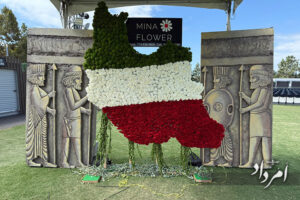
Ultimately, although each part of the festival had its unique appeal, the singing of “Ey Iran” and the raising of Iran’s national flag, particularly the Drafsh Kavian, during the opening, closing, and occasionally throughout the event, conveyed a profound message. These visual and ceremonial displays shone like gleaming pearls, celebrating and honoring the rich heritage of Iran’s ancient culture.