

Joint archaeological excavations were conducted at Tal Malyan in Beyza, identified with the ancient city of Anshan, under the supervision of Kamyar Abdi and Alireza Sardari.
Tal Malyan is one of Iran’s largest ancient mounds, dating back to the prehistoric era, and is considered a key historical and cultural site. Archaeologists recognize it as the second capital of the Elamites, established around 5,200 years ago, and continuously inhabited through the Sassanian period and into Islamic times.
The site’s importance is further highlighted by cuneiform inscriptions on clay tablets identifying it as the renowned city of Anshan. Cyrus the Great mentions Anshan in his famous clay cylinder, presenting himself as its king. During the Sassanian era, Beyza was part of the ancient city of Estakhr, and the site’s proximity to Persepolis and other historical monuments in today’s Marvdasht plain underscores its significance.
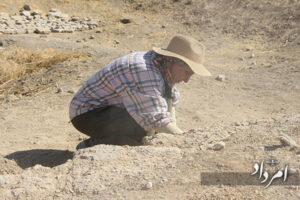
Since September, archaeologists have spent about a month at Tal Malyan, conducting research and excavations to uncover the secrets buried beneath the surface. Abdi and Sardari each supervised excavations in separate sections of the extensive mound, aiming to shed light on its hidden historical treasures.
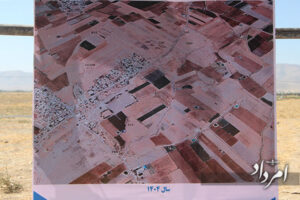
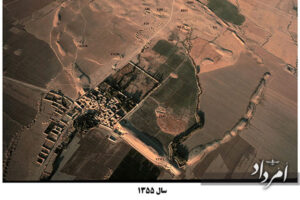
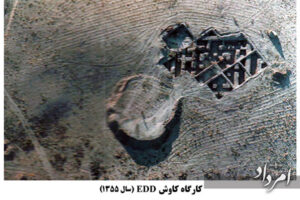
In the area designated as Trench One, Alireza Sardari and his team conducted archaeological excavations. The head of the project noted, “This site is one of the most significant monuments of the ancient world and among the most valuable prehistoric and historical sites on the Iranian Plateau. Its importance stems from its long history as a capital and as one of the earliest walled cities in Iran. The Elamite king constructed extensive walls around the city, traces of which can still be seen in aerial images, making it comparable to other early walled cities such as Susa in Khuzestan, Uruk in Mesopotamia, and several other 5,500-year-old cities.
The Elamite kingdom, which ruled for over 2,000 years, designated this site as its capital, with Anshan recognized as its second capital. Numerous Achaemenid inscriptions refer to rulers as originating from the families of Anshan. Ancient sources, including the Bible and the writings of Herodotus, also mention the city. Yet its exact location remained uncertain, with some scholars suggesting Khuzestan and Izeh or the Bakhtiari lands, others Kerman, and still others ancient Pars.
It was not until 1969–70 that Professor William Sumner, surveying the region, realized these large mounds were not ordinary hills but encompassed a city surrounded by walls. Sumner’s work uncovered clay tablets in Elamite cuneiform bearing the name “Anshan.” Further tablets, later documented by Erica Reiner in a 1972 study, confirmed the identification and location of the ancient city of Anshan.”
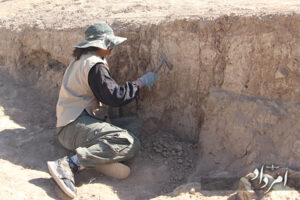
Dr. Sardari, discussing the current archaeological excavations, explained, “In this area, we have opened a 10 by 10-meter trench and are actively conducting excavations. This section was previously explored in the 1970s by Elizabeth Carter and belongs to the Middle Elamite period. We have opened an adjacent trench to continue the investigation. With the support of local authorities in Beyza and particularly the provincial Department of Cultural Heritage, Tourism, and Handicrafts, we hope to continue these excavations in the coming years, shedding light on the hidden chapters of history and uncovering its secrets.”
During this stage of the project, the team in Trench One, under Dr. Sardari’s supervision, discovered a clay tablet inscribed in Elamite cuneiform. The tablet has been sent to the laboratory at the Persepolis World Heritage Site for study, restoration, and research.
The archaeological excavations at Tal Malyan, or the ancient city of Anshan, jointly led by Kamyar Abdi and Alireza Sardari, began in early Shahrivar and continued until mid-Mehr. Tal Malyan, situated in Beyza County about 46 kilometers north of Shiraz and 46 kilometers west of the Persepolis World Heritage Site, spans approximately 200 hectares, making it one of the largest ancient cities in Iran. The site was officially registered as a national heritage site under number 1146 on March 15, 1975 (24 Esfand 1353 in the Iranian calendar).