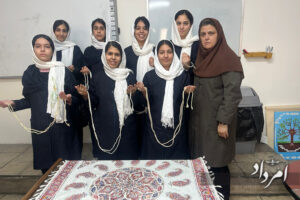


In Zoroastrian tradition, Porseh gatherings are spaces for empathy and togetherness—where survivors come together to soothe their hearts through the recitation of the Avesta and the guidance of Mobeds, honoring the memory of those who have passed. In recent years, however, this calm has sometimes been interrupted by ringing phones or quiet personal conversations.
These interruptions usually stem from everyday habits rather than disrespect, yet even small distractions can weaken the sense of shared connection.
Silence as a Language of Respect and Empathy
In Porseh, silence is not merely the absence of sound—it is a way for participants to express solidarity and compassion. I remember one Porseh when a participant’s phone suddenly rang. The crowd, immersed in the Avesta, instinctively turned toward the noise. No words were exchanged, yet the moment revealed how fragile the shared sense of empathy can be. Conversely, when phones are off and conversations are set aside, only the voice of the Avesta fills the space, and it is in those moments that you truly feel every heart beating together.
Phones and Whispered Conversations: Helpers in Life, Disruptors in Porseh
While phones are useful in daily life, in Porseh they often disturb the atmosphere of calm and reflection. I once saw a teenager scrolling on their phone; even without sound, the light and movement drew everyone’s attention. Likewise, a quiet whisper to a neighbor—so soft it might go unnoticed outside—can feel like a sharp pang to someone grieving. Simply turning off phones and refraining from conversation is a small gesture, yet it carries a profound impact on the shared experience of the gathering.
A Psychological and Social Perspective
Psychologists note that when a group focuses together on the same sound or action, a sense of harmony naturally emerges. I have felt this myself: when everyone in a Porseh remains silent and the Mobed recites the Avesta continuously, your breathing slows and your heartbeat softens. Yet, a single phone or a quiet whisper can disrupt that delicate calm.
Our conduct in these gatherings also shapes how the community is perceived. I once attended a Porseh with a foreign guest who came to learn about our traditions. Later, they remarked, “What struck me most was your profound, empathetic silence.” Imagine if, at that moment, phones had been ringing—what impression would have been left?
A Lesson for the Next Generation
Children notice far more than we often assume. At one Porseh, a young boy sat beside his father. When the father turned off his phone and put it away, the boy immediately switched off his small game device and sat quietly. Had the father been absorbed in his phone, the boy likely would have followed. This simple act became an unspoken lesson: “Here, silence is respect.”
I still recall one of my childhoods Porseh gatherings, where the only sound in the space was the Avesta recitation. That quiet intensity instilled a lasting sense of togetherness and shared presence.
Conclusion: Phones Off, Porseh Alive
No one brings out a phone in Porseh out of disrespect; it is usually a matter of habit. Yet, Porseh is a unique space—one for empathy, reflection, and quiet connection. Turning off phones and avoiding conversation is a small gesture, but it can either disrupt or enhance the gathering.
When phones are silent and quiet prevails, hearts grow calmer, memories of the departed shine brighter, and the Porseh becomes truly alive. This simple act comforts survivors and offers all participants rare moments of peace amid life’s rush.