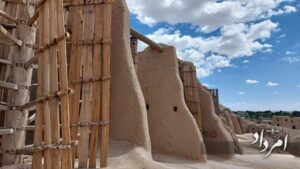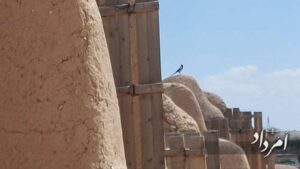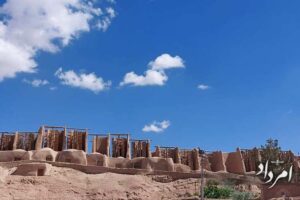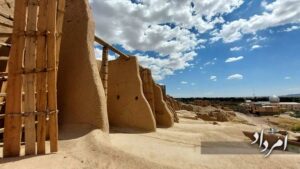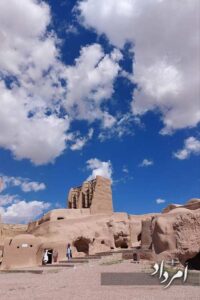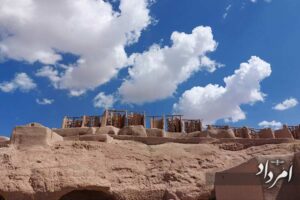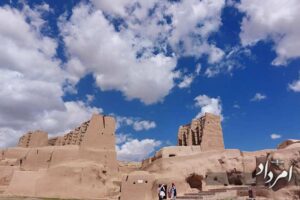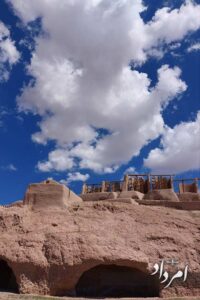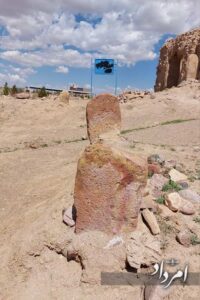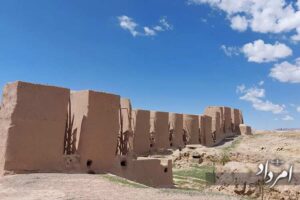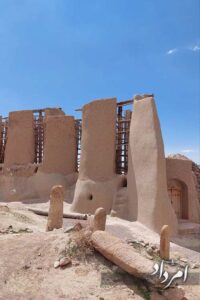


In the eastern and southeastern parts of Iran, many structures are called “Asbad,” and their number has exceeded 500. Especially in South Khorasan and Razavi provinces, many of these structures can be found. In Sistan-Baluchistan, Kerman, and Yazd, intelligent and creative people of those areas have built asbads whose remains can still be seen. An essential and appropriate example of these asbads, a fantastic structure, is located in Nishtifan. Nishtifan is a city in Khaf city in Razavi Khorasan province. What has given this city its reputation is its 121 asbads. The reason for naming this city “Nashtifan” is simple. The reason for naming this city after Nashtifan is apparent. Since that area is not save from the sting of dust storms and the harshness of the winds, they named it Nashtifan. The two words “nash” meaning “sting” and “tifan” meaning “storm” comprise the name Nashtifan, or the sting of scorpions that the storm brings in abundance to this area.
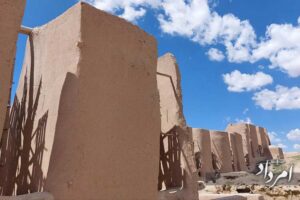
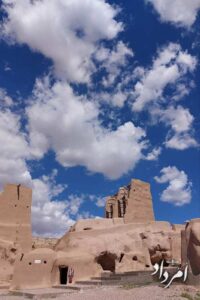
Asbad is a structure for grinding wheat into flour. Our artful and skilled ancestors, in ancient Iran, built asbads that display the art, skill and intelligence of the people of those distant times. They harnessed the strong winds with these structures, a device with two parts: a clay and brick structure and wooden blades that can be used to grind wheat and bake bread and get the energy to continue life.
The age of Iran’s asbads goes back to the ancient times of our land and ancient historians have mentioned these innovative structures in their writings. A question arises; if there was no wind, what would they do with the asbads, and how would they make flour from wheat? The ancient Nashtifanis had found a clever solution for this as well. When there was no wind, they used the river’s power in the south of Nashtifan city and made their amazing asbads spin. This way, the work would be done, and the wheels would start moving. When the wind blows the wheels and paddles turn fast and make the mill pole turn, which in turn makes the stone, which is connected to the inner stone of the structure, rotates. They did the daily work of flouring in a simple but innovative way without much cost. Most importantly, the asbads (as opposed to the current industrial mills) had no pollution and were utterly compatible with nature.
A few more points can be said about Nashtifan’s asbads. In these asbads, a hole with a lever inside is dug under the stone. This lever does the work of controlling, and by pulling it, the mill stops turning. The mechanism of Nashtifan Asbads is also a little mysterious. It has nothing in common with windmills that work in a rotating manner.
All the points we mentioned about Nashtifan’s asbads are such that these tools should be considered as a simple technology that is made with the essential tools and has the most use and efficiency. Nashtifan’s asbads are built based on weathering frameworks, mechanics, and elementary mechanisms to make the most of the environment and nature around them and to increase the efficiency and ability of the tools around them.
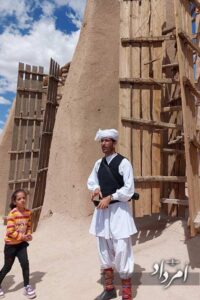
Next to their asbads, the Nashtifanis also hold ancestral traditions. An example of those traditions is celebrating Nowrooz next to the asbad, and playing the tar and tamborine, and also playing local sports games. Because of all these characteristics asbads are close to being registered globally. Nashtifan’s asbads are a blend of history and engineering skills, that not only deserve to be registered globally but also have the potential to develop the tourism industry. Seeing these structures, with their fantastic architecture and intelligent use, attracts tourists to Nashtifan every year to see the technology of the people of that land.