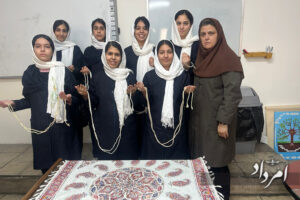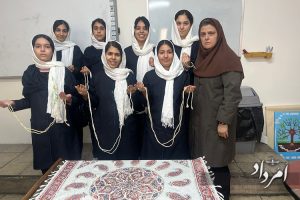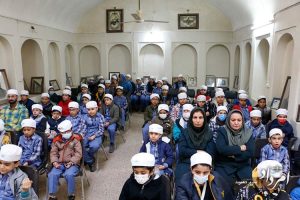


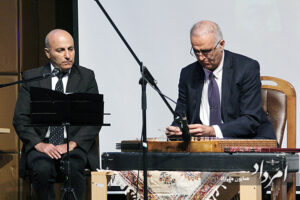
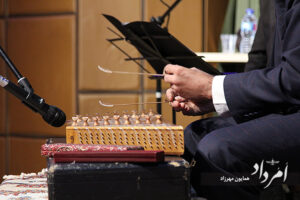
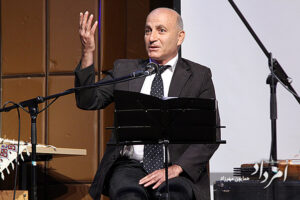
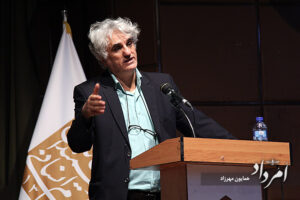
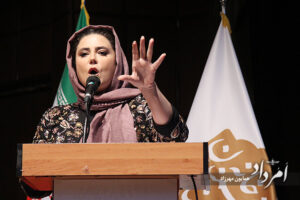
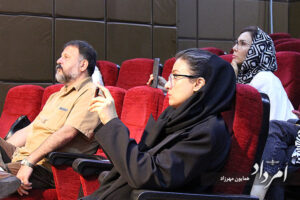
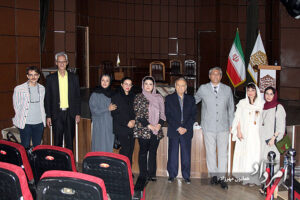
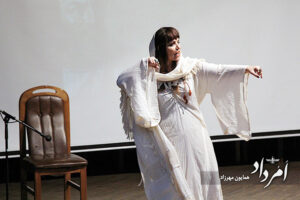
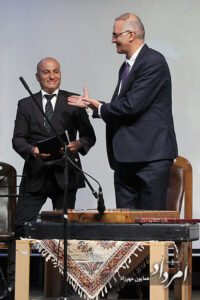
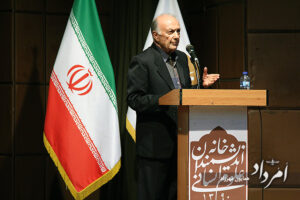
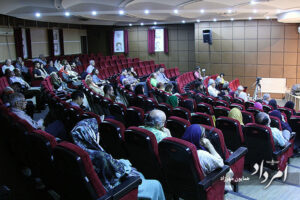
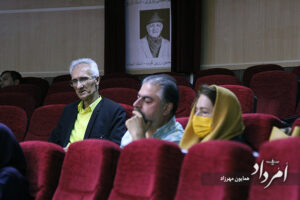
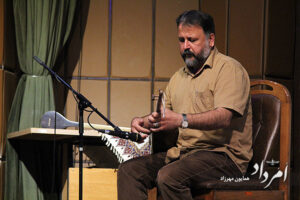
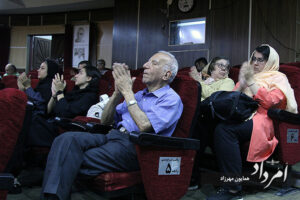
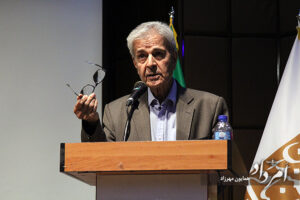
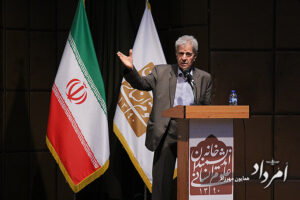
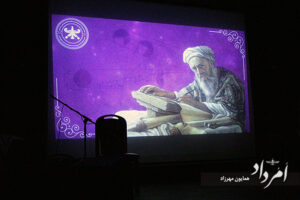
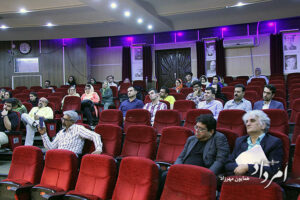
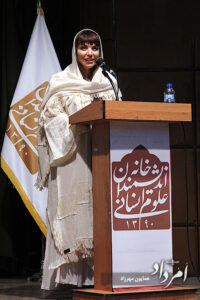
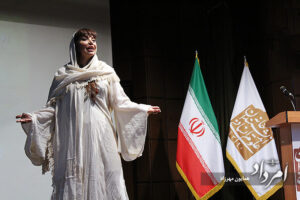
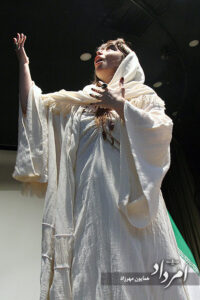
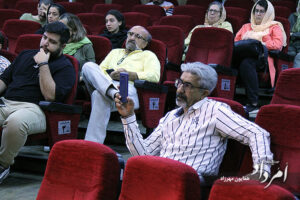
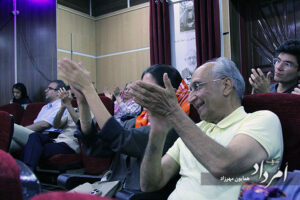
A ceremony for commemoration of the resurrectors of Iran’s civilization, Abu Rayhan Birooni, and Anthropology Day, was held on 19th shahrivar 1402 (September 2023) in the House of Hmanitarian Science thinkers, in Ferdowsi Hall.
In this ceremony, Dr. Mohammad Baqaei Makan, an Iranian writer, said Abu Rayhan Biruni was the founder of a way of thinking known today as positivism or positivism in Western philosophy. In the land older than history, we find many philosophies taking root, which later spread among western philosophers and even in different religions, and of course this is quite believable. Positivism proves the truth scientifically.
He added: This term has been translated into positivism among Persian translators, which does not convey the real meaning. This way of thinking was created for the first time in Iran by Abu Rayhan, but we do not have theorist. The first person who spoke about a subject called “doubt” was not Descartes, but Imam Mohammad Ghazali, but again, this is not presented as a theory to the world.
Baqaie Makan stated: “Nietzsche’s “Eternal Return” was first raised by Suhrevardi. “Superhuman” was first introduced by Ferdowsi. The same with “Positivism”; Abu Rayhan Birooni first introduced it. But none of the masters of philosophy have mentioned this. This term means “truth”, that is, discovered and proven scientifically. The founder of this way of thinking is said to be Auguste Compte, the 19th century French philosopher. According to him science is divided into three types: Physics, chemistry and biology. The same way, history is divided into three parts: religion, philosophy and science. Without denying the religious and philosophy parts, he says that I only like something which is acceptable from the scientific point of view.
He further said that Abu Rayhan sees the truth in knowledge and science. Throughout history, many debates have occurred among thinkers about what is called “the truth”. The famous philosophy of the mid-centuries explains Christianity based on Aristotle’s philosophy.
Baqaei Makan added: It is impossible to have a fixed point of view for every statement forever, and one should refer to science. According to Abu Ryhan Biruni, facts should be discovered through science. Earthly theology says this. When you look into the subject: “positivism”, you will see that it is nothing new. Many centuries before that we had learned men who suggested that the truth can be understood through rationalism and wisdom. In the same period, we had thinkers such as Abul Abbas Iranshahri, Zakaria Razi, and Abu Ali Miskawayh who put forth opinions that we see in the following centuries expressed in the philosophy and natural sciences of the Western world. Abu Rayhan has views on evolution that will later be reflected in Darwin’s thoughts. The idea of human evolution is essentially Zoroastrianism. Mowlavi traveled through different lives until he gained knowledge and wisdom. In other words: He paved the stages of evolution.
He went on to say: Abu Rayhan and Auguste Comte say this: Abu Rayhan believes that we can reason about those things that the sun illuminates. Although their extent is immeasurable, our intellect still needs to reach the point where we can talk about them. Comte also says in “Introduction to Every Future Metaphysics” why we think about what we cannot see. Everyone says something based on their imagination. Abu Rayhan gives importance to sensory experience. It is a critical issue that should be thought about. Abu Rayhan and August Compte stress on scientific reasons and even for a religious reasoning scientific reasoning should be sought.
Baghai Makan added: This way of thinking caused an intellectual transformation in the world, but didn’t this happen during Abu rayhan’s time? Because we are talkers and we don’t practice what we preach. We are not civil people, and we do not practice culture. Everyone knows throwing garbage in the street is wrong, but they do not act because they are not civilized. In all the cities, Hafez-Reading, Saadi-khani and Shahnameh-Reading are held. Still, those sayings and beliefs need to be implemented.
He said: Abu Rahyan Biruni, this great thinker, is a very bright star in our history who has been forgotten. We should thank the organizers of this program for reaching out to the forgotten stars.
Abu Rayhan is one of the thinkers of the Golden Age
In continuation of this ceremony, Dr Asghar Dadbeh, the lasting figure in mystical literature, said: Abu Rayhan Birouni asked himself a scientific question before dying: “Should I know and die or pass by ignorant? How much can a dying person focus on scientific issues? This shows the difference between this thinker and others. All of Abu Rayhan’s words were opposite of what the common people wrote. How much profit is there in scientific work? He believes that one should not look for profit or loss and just pursue the truth.
He added: A searcher searches in a book. After a while, he gives up and says; God knows best, God knows best. Abu Rayhan says: This shows that you are tired and did not try as you should have. You just cannot criticize what the masters of science have proven. Two stories are told about Abu Rayhan. He had heard that diamond is poisonous, and if anyone will eat it he will die. He got hold of a dog and started feeding diamond to this dog in different ways, for a long time, and saw that nothing happened.
Dadbeh continued: “Another story is about the saying “If a viper stares at an emerald stone, it will become blind. So he found a snake and wore an emerald stone around its neck for 9 months, in both hot and cold seasons. He held the stone in different forms in front of the snake’s eyes, but nothing happened. This patience is the result of the training that science gives one. He will put his focus on a problem and will continue working on it until he finds the answer. There should be the right environment, and proper training for one who has grown up like other human beings, but will act differently. It is not for no reason that Ab Rayhan appears in history and speaks against the circumstances swims against the tide).
The first four centuries after Arab invasion were golden for Iran. In Iran, when we lose something precious we start struggling to get it back; sometimes, we succeed, and sometimes we don’t. We must learn the habit of moving steadily and slowly. Abu Rayhan was educated in the 4th century, and the same situation continued in the 5th century. Ferdowsi, Ibn Sina, and Abu Rayhan are among the thinkers of this golden age. If Abu Rayhan was forgotten it is because those conditions did not persist. When we study history and come to the 5th or 6th centuries (after Arab invasion), we notice that Abu Rayhan’s thoughts and his perseverance were being learned and followed up. If the Mongol attack had not happened, the result of the thinking of great men like Abu Rayhan Biruni could have been reaped, but unfortunately, they were uprooted. Unfortunately, Iran’s history shows we do not make the right decisions in critical moments. Iran has stood with thinkers such as Abu Rayhan, Khawaja Nizam al-Molk, Bouzarjamhar, and Amir Kabir until today. It will continue to stand by the grace of God.
Abu Rayhan is the first cultural anthropologist
Then, Saeedeh Parash, anthropologist and researcher, took the stand. She said: one of the most essential features of Abu Rayhan Biruni is cultural tolerance. He goes to India and studies the cultural society of India. He teaches them language and learns language from them. When we look at the scope of cultural Iran, We see a macro-culture that gave birth to subcultures, which have their characteristics, but separate from the root culture.
She added: A distinguished researcher like Abu Rayhan is the first cultural anthropologist. Abu Rayhan is very interested in field studies and oral culture. Maybe, access to texts and resources are not easy. Some resources are lost, and access to the rest is not easy. In collecting Iranian history and myths, he turns to field research and oral culture, taking into account the fate of the researchers before him, who had been executed because of using the rare resources. In his books “Ma lil Hind” and Asar Al-Baghiyeh” he used the method of recording events without mentioning sources and instead mentioning that they were his personal opinion.
Parash said: “The plague that inflicts humanity science, is indifference and excitement. Abu Rayhan records events, for example, the concept of Tirgan festival being about territorial integrity. Tirgan celebration has come to us without the slightest missing out of details, by using Abu Rayhan’s honesty in recording events and ethnography. He brought reasons for celebrating Tirgan. The archery of Arash is one of them Sources and texts are incomplete and unfinished. Customs and traditions are considered as oral culture and the culture of common people. The rulers did not observe these occasions, with the exception of Nowrooz. It is mentioned in “The history of Bukhara” that an incident happened during the Chahr-shanbeh-suri festival (last Wednesday of the year). A piece of fire fell on a curtain and the palace burned down. Such events are few.
She went on to say: Here again, the masterpiece of Abu Rayhan Biruni can be seen. He carefully and intelligently points out the border between Iran and Turan. It gives us an interesting analysis; this event becomes one of the celebrations, giving the message that it is important for the people. Instead of mourning for Arash, a festival is held each year, in his name.
This researcher added: “The second subject that Abu Rayhan attends to is the description of the people’s every-day lives, which encounters a big challenge: the concept of territorial integrity has been the people’s biggest concern. Another point worth mentioning is that he remembers this day with the name of his country and land. The government’s main task was establishing internal order and fighting external threats during his term. Abu Rayhan refers to Farmers Day. The day when agriculture is commemorated. He also mentions Tirgan festival as the day to commemorate recording and writing texts. This day for commemorating texts come to us from Hooshang. Abu Rayhan mentions topics together with his guidance and does not avoid the positivist method.
Iran has been a concept of civilization for Abu Rayhan
Next, Mustafa Nasiri, a researcher and one of Dr. Seyedjavad Tabatabai’s students, said that Abu Rayhan talks much about “us” in his works. This is one aspect that has never been addressed. In Mallahand, he talks about the father’s son. He says there are three ways to understand the relationship between father and son. A child is produced from the back of a father in a mother’s womb, which is the same with us. What does this “we” mean?
He added: “From the second century (after Arab invasion) preparation for the shaping of Iran’s borders began again, and in the fourth century, it was recreated. Can we mention Iran or not? An essential part. Somewhere, it talks about the Sanskrit language. He says there is no equivalent in Arabic and Persian, and our audio system cannot pronounce them correctly. What language does Abu Rayhan mean?”
Nasiri said: Abu Rayhan says: Our ears cannot distinguish them well. Which languages like this were developed? It is essential to know which language Abu Rayhan means. He describes chess played in India. We can consider different styles of playing chess. He speaks of muskokat and mashakhil. These cases are mentioned in all of Abu Rayhan’s works, especially in Mallahand’s research, which is anthropology and humanity. Knowing who this human is and where he lives is very important for us.
He said: The science of geography refers to seven regions, of which Iranshahr is the fourth region. Iran is placed in the fourth region, i.e., the heart of the world. The “we” Abu Rayhan talks about is in Kharazm. He gives the answer to this hypothesis in Asar Al Baghiyeh. He splits eras with the help of the calendar. The calendars used in this field were split into four or five stages: Before Alexander’s attack, after Alexander’s attack, the Sasanian period, and the period after Islam. Abu Rayhan compares these calendars in Athar al-Baqiyyah.
This researcher stated Iran was a concept of civilization for Abu Rayhan. Abu Rayhan is one of the rivers that started in the previous centuries and met in the fourth century. Iranian historians can record the history of Iran on earth. Tabari accepts the basis of Iranian history and writes that they are the only nation that history has shown has never broken. Razi, Abu Rayhan, and Abu Ali Sina established these sciences in Iran.
This researcher stated that Iran had a civilizational concept for Abu Rayhan. Abu Rayhan is one of the rivers that stems from the previous centuries and meets with other rivers in the fourth century. But it has never disappeared and will never disappear. This is the civilizational definition of Iran. Abu Rayhan has played a significant role in transforming Iran’s civilization. The most important pillar is the scientific aspect that keeps people around the political axis. Abu Rayhan does this. He was engaged in politics. In the old period, poets and intellectuals could not escape politics. Abu Rayhan was no exception to this and was a political poet of the Ghaznavids for many years.
He said Abu Rayhan was intelligent, from Kharzam, and lived in the neighborhood of Turks. He knew the Turks very well. While in the Ghaznavid court, he wrote the book “Warning against the danger of the Turks,” which has not reached us but is mentioned in his other works.
We find many Iranian traditions recorded in Birooni’s books.
Next, Kamran Khosravi, writer and researcher in history, spoke. He said: “We find many Iranian festivals and customs in Birooni’s works. Birooni speaks about events that are not found in other sources. While researching, I came across Fereydoun’s lineage, which Biruni mentioned: Fereydon bin Gaw bin Gaw bin Gaw. He has stated the heritage of Fereydon correctly; that is, Fereydon is the cow totem.”
He added that Kharazm, the birthplace of Biruni, was one of Iran’s most critical civilizational centers before and after Islam. Abu Rayhan Baruni is one of the language geniuses. He knew Cyrus and Darius through Greek and Syriac texts. Khwarazmis do not accept the official language of Samanis and Ghaznavis. The Khwarazmi language could not resist the Turkish language and disappeared.
To understand the modern world, we must read and understand our history.
In the continuation of this ceremony, Majid Asadi, a researcher and author, said: These two questions are raised: Why should such meetings be held, and why should we study history? At the time when Genghis invaded Iran, the people were the guardians of the country. They were the people who preserved the culture of this border and region and were able to produce magnificent texts to defend our history. Even Tabari, who intended to write the history of the prophets, had to write the history of Iran first to follow the rest. Tabari says that after Yazdgerd, Iran fell into the hands of the Arabs.
He added: “History awakened its children to write texts and be able to understand and keep their shoulders high.” In the last century, especially during the constitutional era, after 2-3 decades great reformers tried to find our history. Although they could not find all of it but they reached a compromise. After the constitutional revolution, we do not see any Iranian text that is based on Iranian geography. Today, more than anything, we need to read our history. We must read and understand our past to understand the modern world.
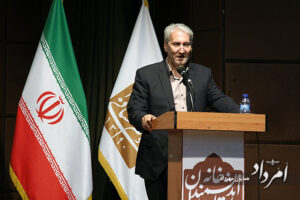
Photos by Homayoun Mehrzad